 AgronoBlog – Agriculture Blog
 In agricultural soil, arbuscular mycorrhizal fungi (AMF) play a crucial role in promoting plant growth. These microorganisms form symbiotic associations with roots, significantly improving the absorption of essential nutrients such as phosphorus. In this article, we will explore what AMF are, their benefits, main species, and how to use them to enhance agricultural productivity.
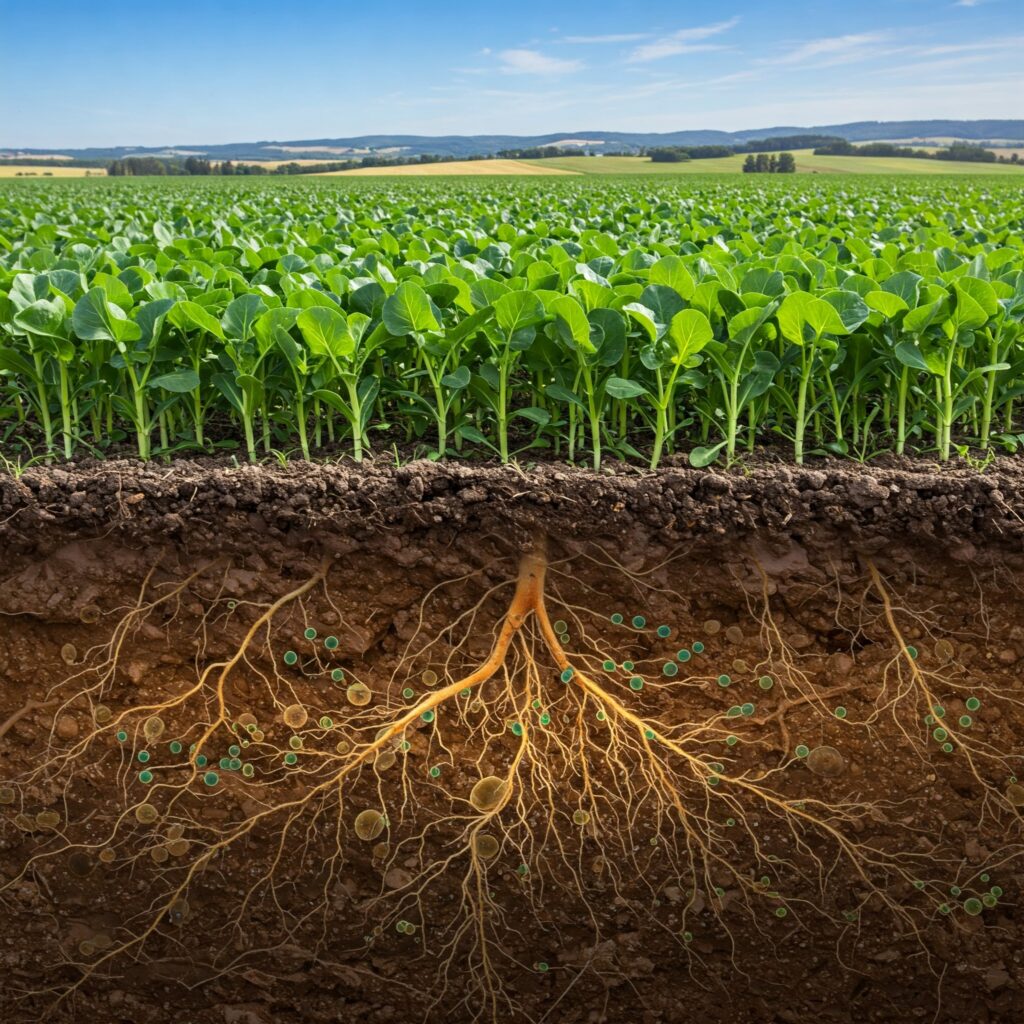
What are arbuscular mycorrhizal fungi?
AMF are a type of symbiotic fungus that associates with the roots of approximately 80% of terrestrial plants. Through this symbiosis, the fungus receives carbohydrates from the plant, while the plant benefits from increased uptake of water and mineral nutrients. Arbuscular mycorrhizae are particularly effective in the uptake of phosphorus, an essential nutrient for plant growth.

Main species of AMF and their characteristics
The following are some of the most common AMF and their distinctive characteristics:
- Glomus spp.: Improves the absorption of phosphorus and other nutrients, increasing yield in corn and wheat crops.
- Rhizophagus intraradices: Increases resistance to drought, ideal for dry soils.
- Funneliformis mosseae: Helps plants tolerate heavy metals in contaminated soils.
- Claroideoglomus etunicatum: Promotes growth in phosphorus-poor soils, especially benefiting perennial crops.
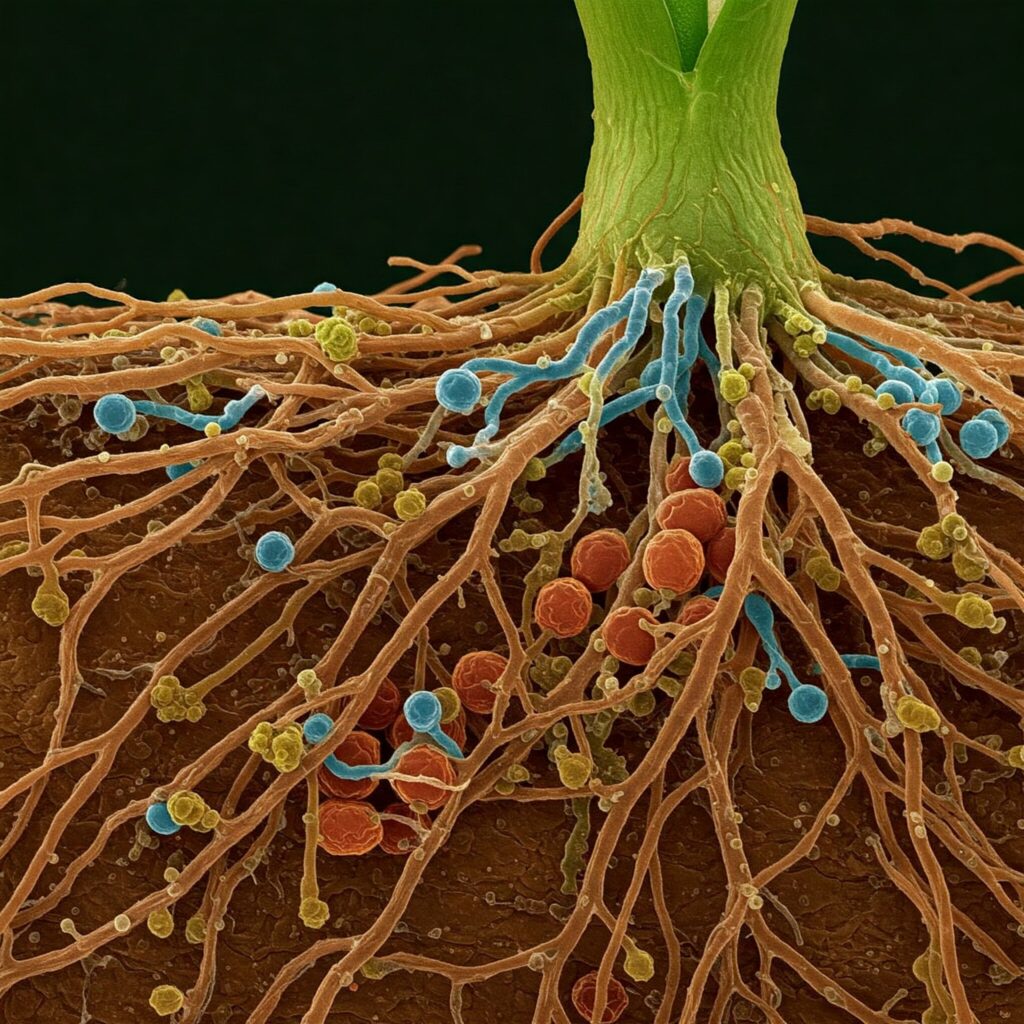
Benefits of AMF in agriculture
Arbuscular mycorrhizal fungi provide multiple benefits that positively impact agricultural productivity:
- Increased nutrient absorption: AMF increase the uptake of phosphorus, zinc, and copper, improving plant nutrition.
- Resistance to water stress: The hyphal network extends the reach of the roots, facilitating access to water in drought conditions.
- Improved soil health: These fungi promote soil aggregation, improving its structure and porosity.
- Reduction in the use of chemical fertilizers: By optimizing nutrient absorption, the input of synthetic fertilizers can be reduced.
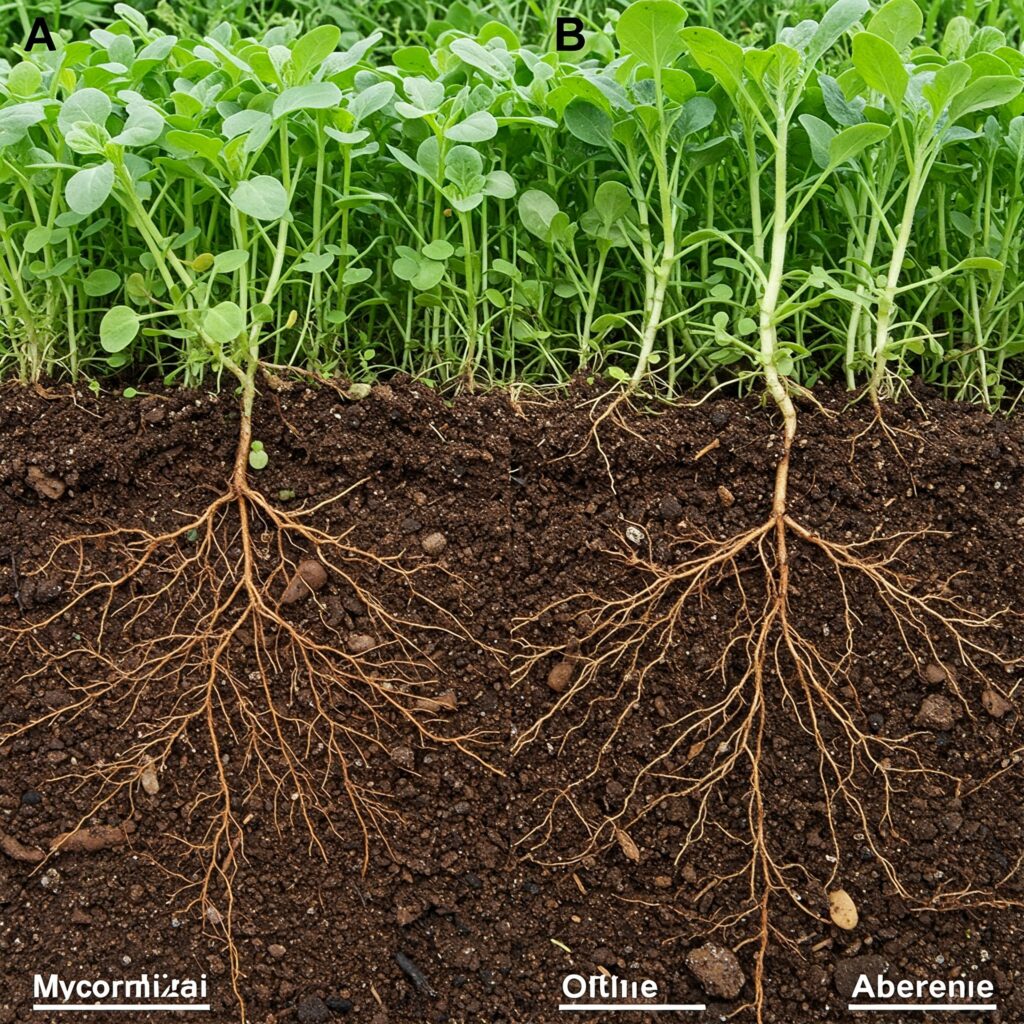
Practical implementation in agricultural crops
To take advantage of the benefits of AMF, it is essential to apply biological products containing viable spores. It is recommended to use specific inoculants at the time of sowing or in early stages of growth, ensuring adequate colonization of the roots.

Conclusion
Arbuscular mycorrhizal fungi are fundamental for more sustainable and productive agriculture. Including these microorganisms in agricultural systems contributes to the efficient use of natural resources and promotes the healthy growth of crops, especially in nutrient-poor soils.
References
- Smith, S. E., & Read, D. J. (2008). Mycorrhizal Symbiosis. Academic Press.
- Barea, J. M., et al. (2005). Microbial co-operation in the rhizosphere. Journal of Experimental Botany, 56(417), 1761-1778.