 AgronoBlog – Agriculture Blog
 Imagine an lush banana field, full of promise, that suddenly begins to wilt for no apparent reason. The fruits, instead of ripening, rot internally, and a viscous sap oozes from the stems. This is the devastating scenario that Moko of Bananas can unleash. Caused by the virulent bacterium Ralstonia solanacearum (formerly known as Pseudomonas solanacearum), this disease represents one of the greatest threats to banana and plantain cultivation in various tropical and subtropical regions of the world. Its high contagiousness and the lack of a chemical cure make prevention and early eradication the only real defenses. Are you ready to understand this microscopic enemy and protect your plantation?
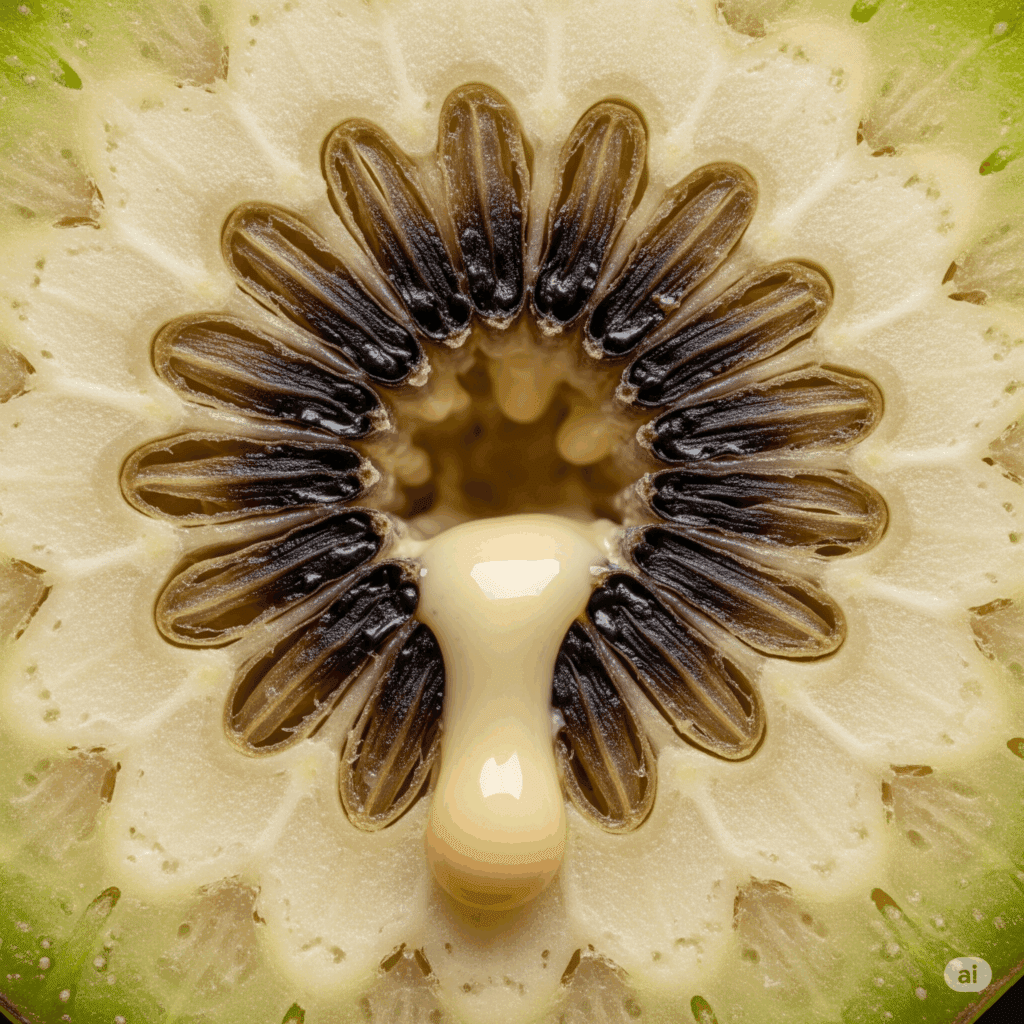
The Causal Agent: What is Ralstonia solanacearum Race 2?
Moko of Bananas is caused by a specific strain of the bacterium Ralstonia solanacearum, known as race 2. This bacterium is a soil and vascular pathogen, meaning it lives in the soil and, once it enters the plant, it moves through its vascular system (xylem), obstructing the flow of water and nutrients.
Unlike other races of Ralstonia solanacearum that affect a wide range of crops (such as tomato, potato, or tobacco), race 2 has a marked specificity for plants of the Musaceae family, including bananas, plantains, and heliconias. Its ability to survive in the soil and be transported by multiple vectors makes it a constant threat.
How Does the Bacterium Disseminate? Moko’s Propagation Routes
The dissemination of Moko of Bananas is alarmingly efficient and can occur through several routes:

- Contaminated Tools: This is possibly the most common and fastest way of spreading. Pruning tools, desuckering machetes, or any agricultural implement that comes into contact with a diseased plant and is then used on a healthy plant, can transfer the bacterium.
- Insect Vectors: Insects that visit the male flowers (bells) of banana plants, such as bees or wasps, can carry the bacterium from an infected flower to a healthy one. This is an important route of bunch dissemination.
- Infected Planting Material: The use of suckers or corms from diseased plants is a sure way to introduce Moko into a new plantation or spread it in an existing one.
- Runoff Water: Rain or irrigation water that flows from infested areas can drag the bacterium and transport it to healthy zones.
- Root Contact: Although less common, the bacterium can pass from one plant to another through direct contact between their root systems, especially in saturated soils.
- Animals: Some animals that feed on banana plants, such as pigs or rodents, can ingest infected tissue and, through their feces or lesions, disseminate the bacterium.
Symptoms and Diagnosis: Identifying Moko in Your Plantain Crop
Early detection of Moko of Bananas is crucial to implement effective control measures before the disease spreads uncontrollably. Symptoms vary slightly depending on the infection route, but there are distinctive signs.
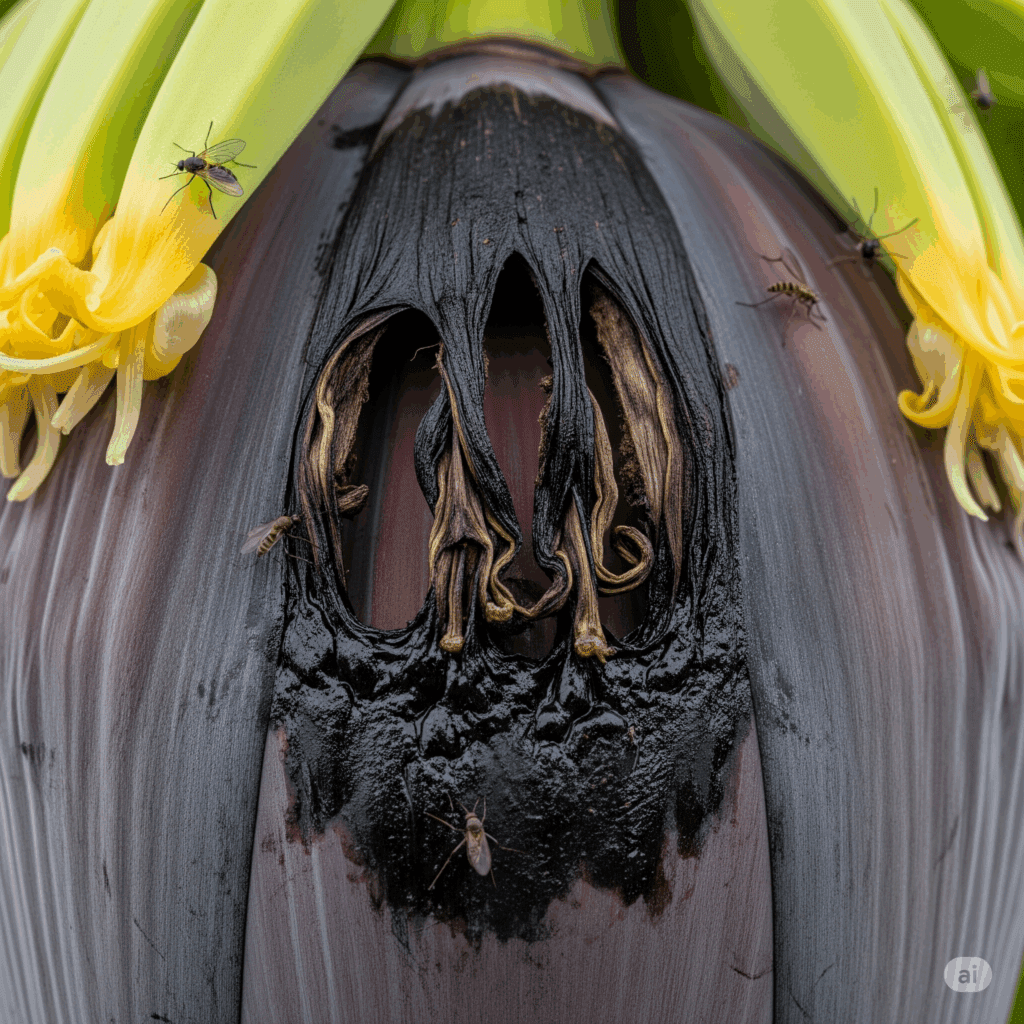
Symptoms on Banana Plants: A Detailed Look
- Unilateral Leaf Wilt (Initial): Often, the first visible symptom is a sudden wilting of one or more young leaves, which usually starts on a single side of the plant. The leaves become chlorotic (yellowish) and then necrotic (brown), but remain attached to the pseudostem. As the disease progresses, the wilting spreads to the entire plant.
- Internal Vascular Discoloration and Bacterial Exudate: When a transverse cut is made in the pseudostem, rhizome (corm), or petiole of an infected plant, a characteristic brown to black discoloration of the vascular bundles is observed. When the cut tissue is pressed, or simply by observing after a few minutes, a creamy, milky, or yellowish bacterial exudate may appear, which is a distinctive sign of the disease. This exudate contains millions of bacteria.
- Rot and Blackening of the Male Flower (Bell): In many banana cultivars, the male flower rots, turns black, and exudes a whitish substance. This is a common infection route for insect vectors.
- Premature and Internal Fruit Ripening: Fruits in an infected bunch may ripen prematurely and irregularly, often without reaching their full size. When an affected fruit is cut, the pulp shows an internal brown or grayish discoloration and a dry, fibrous rot. A bacterial exudate can also be observed when the fruit fingers are pressed.
- Stunting and Plant Death: Infected plants stop their growth, produce deformed or no bunches, and eventually wilt completely and die.
Differentiation from Other Diseases
It is important not to confuse Moko with Panama Disease (Fusarium Wilt), which also causes wilting. The key to differentiation lies in the characteristic bacterial exudate of Moko and the rotting of the male flower, which are not present in Panama Disease. Furthermore, the vascular discoloration in Fusarium tends to be more reddish and without exudate.
Control and Management of Moko of Bananas: Eradication and Biosecurity
Since there is no cure for plants infected with Moko of Bananas, management focuses on preventing infection, early detection, and immediate eradication of diseased plants and inoculum sources.
Fundamental Control Strategies
- Rigorous Biosecurity: This is the cornerstone of Moko prevention.
- Use of Certified Planting Material: Plant only suckers or tissue culture seedlings that are disease-free. Never use propagation material from plantations where Moko has been reported.
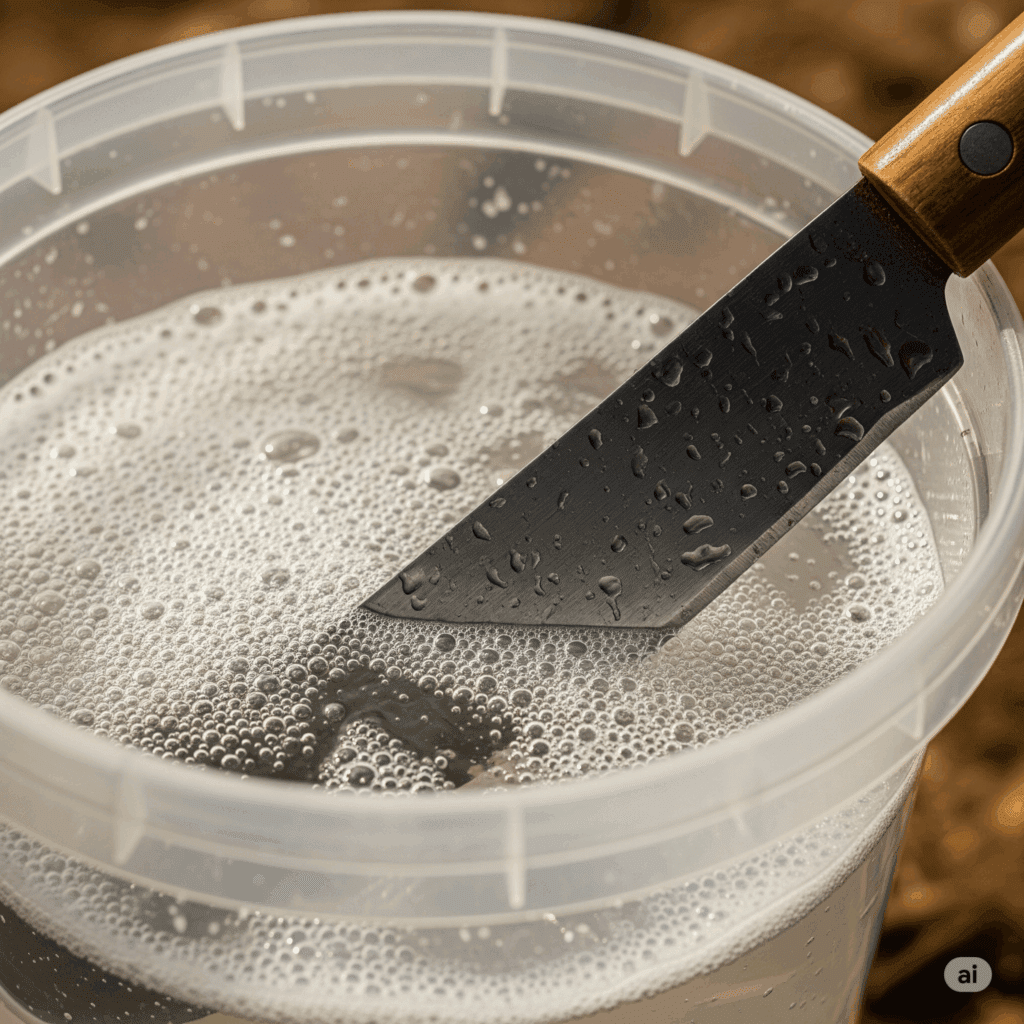
- Tool Disinfection: Rigorously disinfect all agricultural tools (machetes, knives, shovels) before using them on each plant. A 10% sodium hypochlorite (household bleach) solution (1 part bleach to 9 parts water) is effective. Leave the tool submerged for at least 30 seconds.
- Traffic Control: Restrict the movement of people and vehicles within and between plantations. Implement disinfection stations at farm entry and exit points.
- Water Management: Prevent irrigation or runoff water from infected areas from reaching healthy areas. Consider drip irrigation systems instead of flooding.
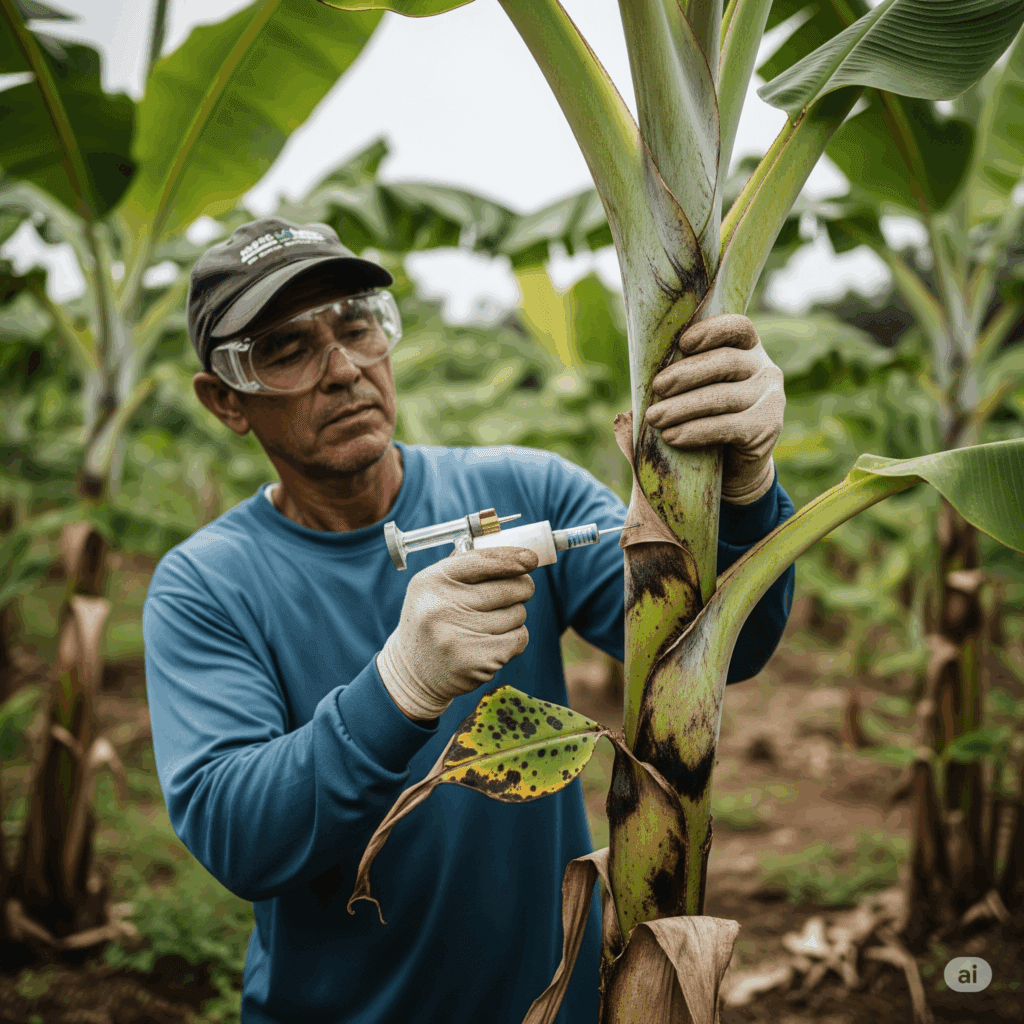
- Eradication of Diseased Plants: At the first symptom of Moko, the plant must be eradicated immediately.
- Herbicide Injection: The most effective way is to inject a systemic herbicide (such as 20% or 30% glyphosate) directly into the pseudostem of the diseased plant. This ensures its rapid death and prevents the production of new suckers. It is also recommended to inject adjacent plants, even if they do not show symptoms, as a preventive measure.
- Isolation of the Focus: Establish an isolation zone of at least 10 meters around the eradicated plant. Do not plant bananas or plantains in this zone for at least 6 months, and preferably up to a year.
- Sucker Removal: Eliminate any sucker or sprout that tries to grow from the eradicated plant, as they will be infected.
- Control of Insect Vectors: Reduce the population of insects that visit male flowers.
- Early Removal of the Male Flower: Cut and remove the male flower (bell) from the bunches as soon as possible, right after the last hand of fruits has developed. This reduces the entry point for the bacterium transmitted by insects. Disinfect the cutting tool after each bell.
- Pest Control: Monitor and control populations of insects like bees or wasps in the plantation, although widespread chemical control is not always practical or desirable.
- Cultural Management:
- Weed Control: Keep the area around the plants clean of weeds that can serve as a reservoir for the bacterium or a refuge for insect vectors.
- Crop Rotation: In areas where Moko has been severe and losses are high, consider rotating with non-host crops (such as grasses, corn, or legumes) for a period to reduce the bacterial load in the soil.
- Balanced Fertilization: An adequate nutrition program can strengthen the plant, making it more resilient, although it does not immunize it against infection.
Moko of Bananas is an implacable, but not invincible, enemy. The key to protecting your production lies in constant vigilance, the strict implementation of biosecurity measures, and immediate action at the first signs of the disease. Collaboration between producers, agronomists, and phytosanitary institutions is essential to contain and mitigate the impact of this devastating disease on the banana industry. Every preventive step counts.

References
- CABI. (n.d.). Ralstonia solanacearum (bacterial wilt). Retrieved from https://www.cabi.org/isc/datasheet/46132
- FAO. (2019). Moko disease of banana and plantain. Retrieved from https://www.fao.org/plant-protection/resources/fao-technical-guidance-resources/moko-disease-banana-plantain/en/
- Government of Mexico – SENASICA. (n.d.). Bacterial Wilt of Plantain (Moko). Retrieved from https://www.gob.mx/senasica/documentos/marchitez-bacteriana-del-platano-moko
- Plantix. (n.d.). Banana Moko. Retrieved from https://plantix.net/es/library/plant-diseases/100062/moko-disease-of-banana/
- Promusa. (n.d.). Ralstonia solanacearum. Retrieved from https://www.promusa.org/Ralstonia%20solanacearum
- University of Nariño (Colombia). (2018). Integrated Management of Moko Disease (Ralstonia solanacearum) in Plantain. [Technical Publication].
- World Banana Forum. (n.d.). Moko Disease. Retrieved from https://www.fao.org/plant-protection/banana-disease/moko-disease/en/
Related posts:
 Optimizing Banana Cultivation: Strategies for Successful Production
  Optimizing Banana or Plantain Cultivation: Detailed Strategies for Successful and Sustainable Production
  Is Your Banana ‘Bagged’? Discover the Hidden Truth of Bunchy Top Virus (BBTV)
  Banana Anthracnose: The Dark Side of Ripening That Affects Your Harvest