 AgronoBlog – Agriculture Blog
 The rustle of the wind through the leaves of a banana plantation should be a sound of prosperity, but for many farmers, it carries with it the fear of one of the most destructive diseases: Black Sigatoka. This fungal scourge, caused by Pseudocercospora fijiensis (formerly Mycosphaerella fijiensis), not only drastically reduces crop yield but also affects fruit quality, threatening the sustainability of global banana production. What makes Black Sigatoka so relentless? Its ability to spread rapidly, its direct impact on plant photosynthesis, and the need for constant management make it a monumental challenge. But, with the right knowledge and strategies, it is possible to mitigate its impact and protect the vitality of your plantation.
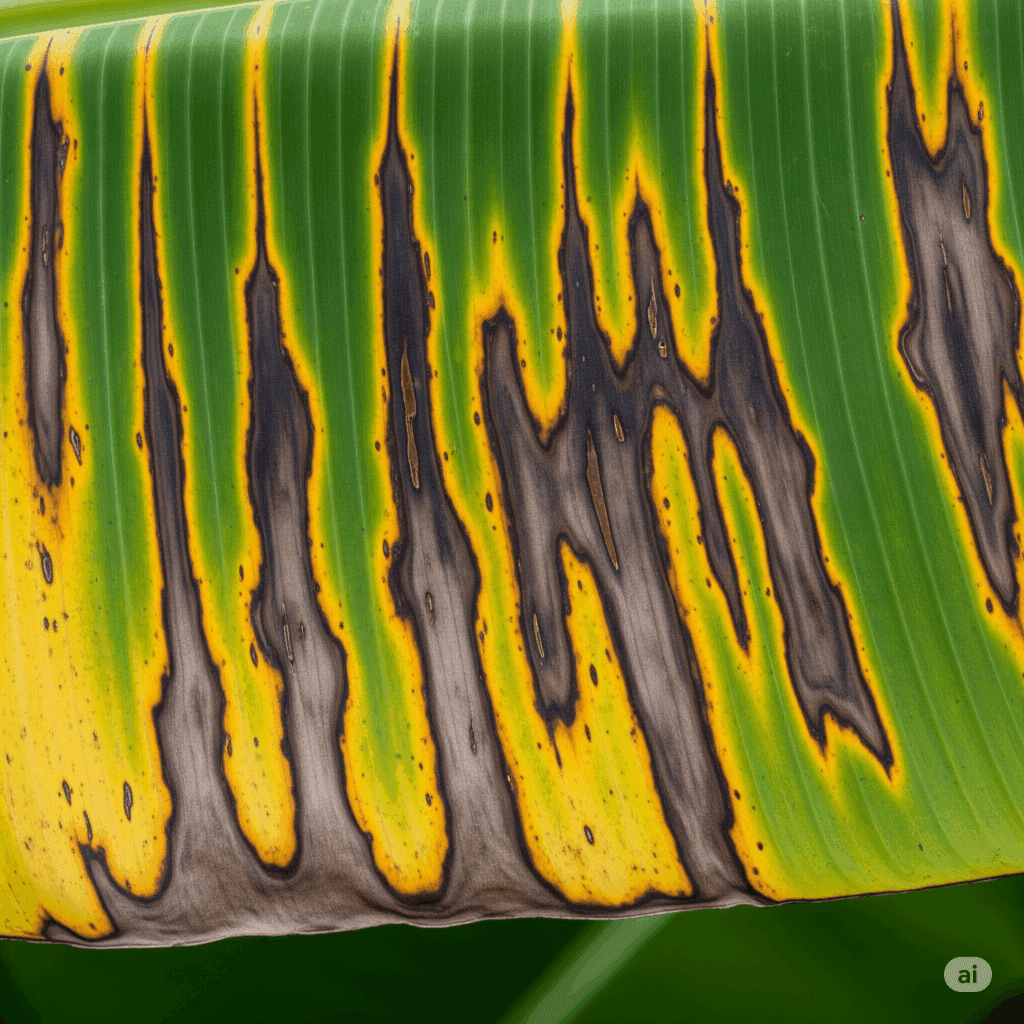
What is Black Sigatoka? A Look at the Pathogen and its Life Cycle
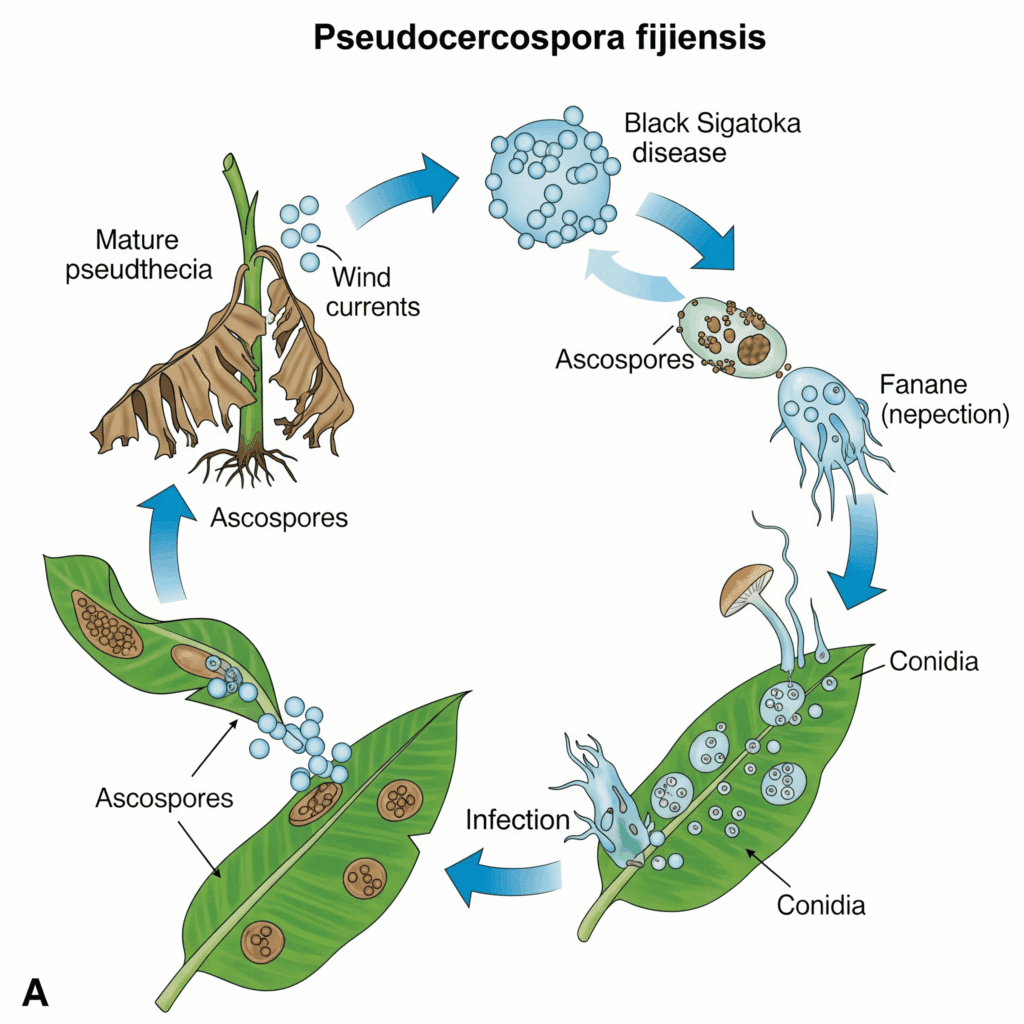
Black Sigatoka is a foliar disease that specifically attacks the leaves of banana and plantain plants. The causal fungus, Pseudocercospora fijiensis, reproduces through two types of spores: ascospores and conidia.
Ascospores are the main culprits for long-distance dispersal and for initiating new infections. They are released from structures called pseudothecia, which form on dead and fallen leaves on the plantation floor. These spores are carried by wind and rain to new healthy leaves.
Conidia, on the other hand, are produced in the active lesions of infected leaves and are responsible for local spread within the same plant or to nearby plants. They are mainly disseminated by rain splash and dew.
Once the spores land on the leaf surface, they need adequate moisture and temperature to germinate and infect. The fungus penetrates the leaf through the stomata (small pores on the leaf surface) and begins to grow internally, forming mycelium and causing the characteristic lesions. This cycle repeats continuously under favorable conditions, leading to a rapid advance of the disease.
Key Symptoms: How to Detect Black Sigatoka in Time
Early detection is crucial for effective Black Sigatoka management. The symptoms follow a characteristic sequence of development, from small, almost imperceptible spots to complete leaf necrosis.
Phases of Disease Development in Banana Leaves
- Small Streaks (Phase 1-2): Initially, tiny chlorotic streaks or white to light yellow spots appear, visible on the underside of young leaves, generally on leaves 3 to 5 from the bud. They are difficult to see with the naked eye at first.
- Brown Streaks (Phase 3): As the fungus progresses, these streaks lengthen and widen, taking on a reddish-brown color. They are not yet necrotic.
- Elliptical Spots (Phase 4): The streaks continue to expand and develop into elliptical-shaped spots, surrounded by a yellowish halo. In this phase, the center of the lesion begins to sink and turn a darker color, indicating cell death. It is at this point that conidia production is most active.
- Black Spots with Necrotic Center (Phase 5): The spots become an intense black color, with a depressed necrotic center, often surrounded by a bright yellow border. The lesions enlarge and can coalesce (merge), covering large areas of the leaf. It is at this stage that pseudothecia form and ascospores are released, perpetuating the cycle.
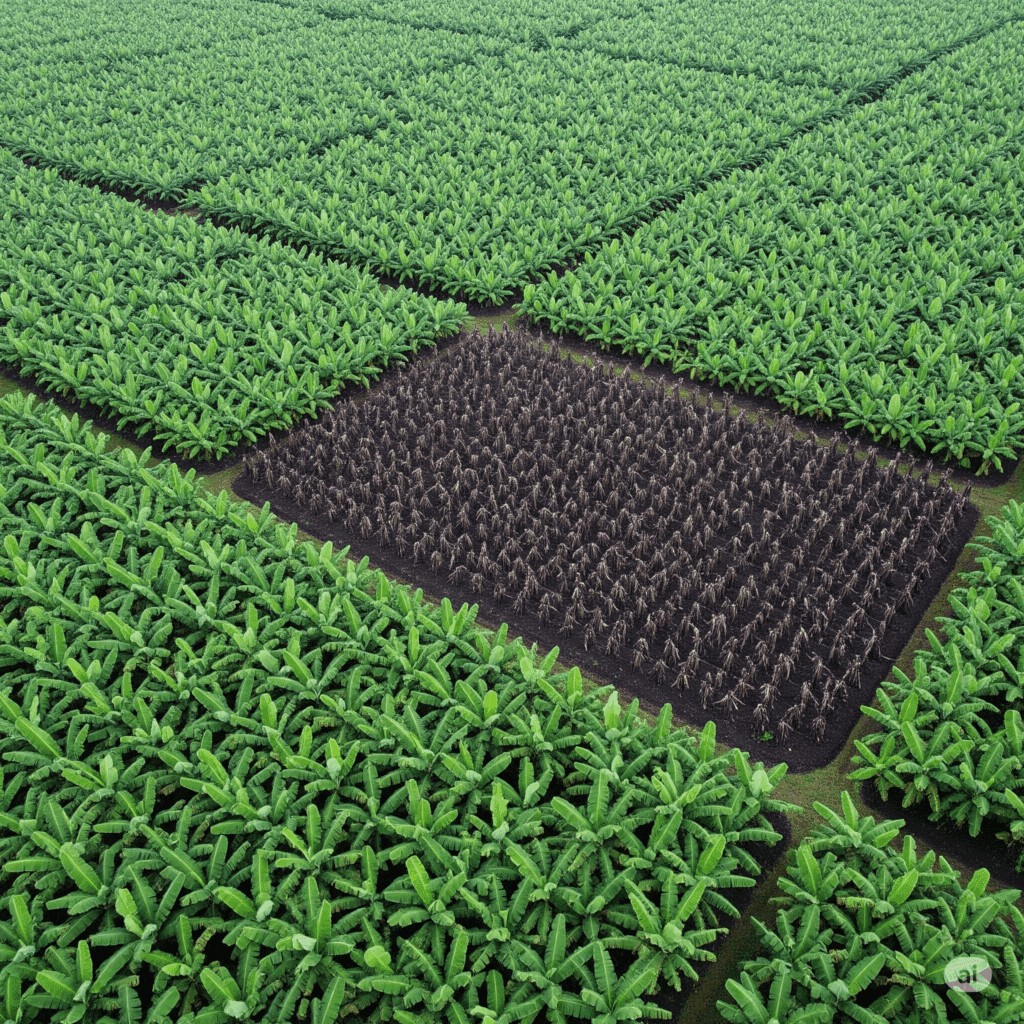
- Total Necrosis (Phase 6): Finally, the entire leaf turns yellow and then brown, dying prematurely. The affected leaves hang dry from the pseudostem, giving the plant a “scorched” appearance and drastically reducing its photosynthetic capacity. This reduction directly affects bunch filling, resulting in smaller, immature fruits with a reduced shelf life.
Impact on Productivity: Why is Black Sigatoka so Damaging?
The damage caused by Black Sigatoka is not just aesthetic. Its direct impact on the plant’s photosynthesis process is the main reason for economic losses.
- Reduced Photosynthesis: By destroying leaf tissue, the disease reduces the plant’s ability to convert sunlight into energy, which translates into lower production of sugars and starches.
- Premature Fruit Ripening: Plants stressed by the disease divert energy to defend themselves, leading to an anticipated and irregular ripening of the bunches. These fruits are smaller, have a lower weight, and are of inferior quality, making them less attractive to the market.
- Decrease in Bunch Weight and Size: The lack of energy reserves limits the proper development of the bunch, resulting in fewer hands and fingers per bunch, and a lower total weight.
- Increased Production Costs: The control of Black Sigatoka requires significant investments in fungicides and cultural practices, increasing operational costs for farmers.
Integrated Management Strategies for Black Sigatoka: A Holistic Approach
Controlling Black Sigatoka is not an easy task and requires a combination of methods. An Integrated Black Sigatoka Management (IBSM) approach is essential to suppress the disease effectively and sustainably.
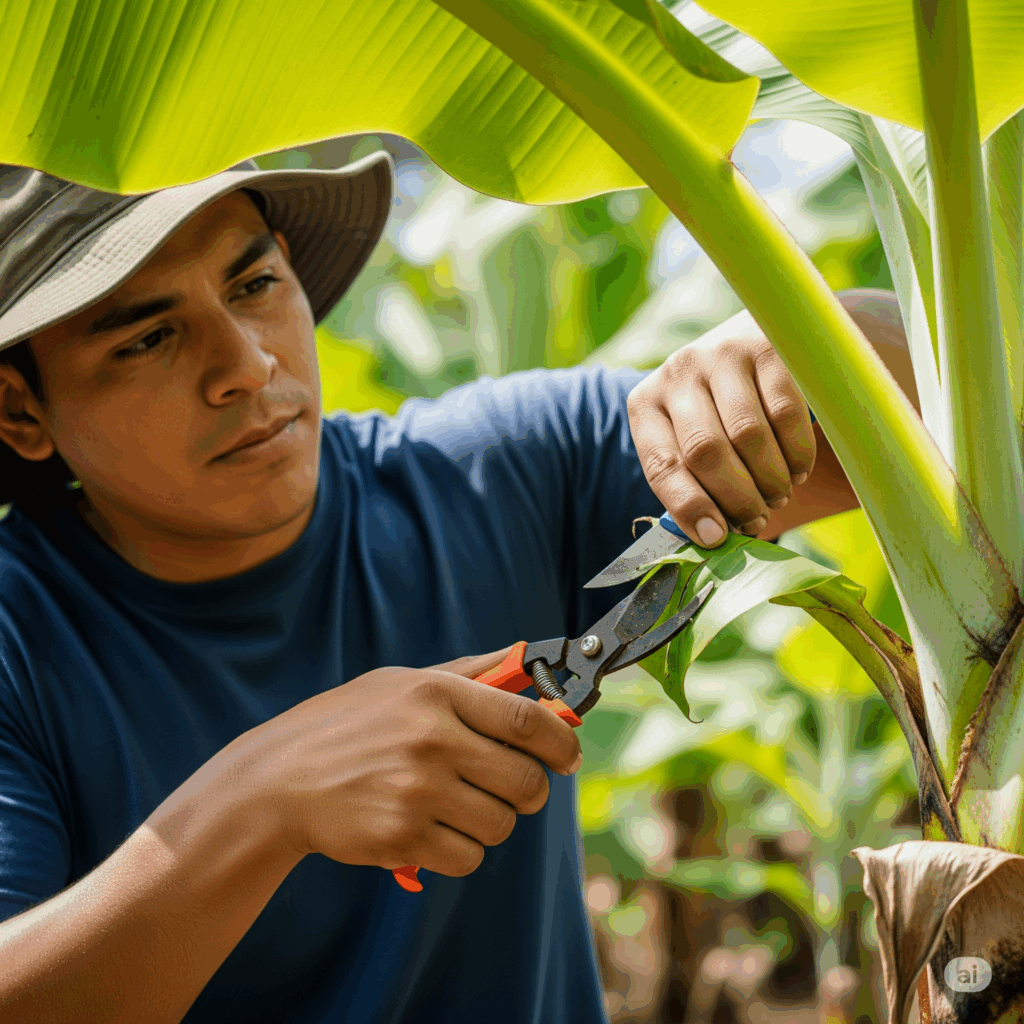
Cultural and Agronomic Practices for Control
- Sanitary Defoliation: The regular removal of the most affected leaves (phases 4, 5, and 6) is one of the most important practices. This significantly reduces the amount of inoculum (spores) in the plantation. The cut leaves must be buried or removed to prevent dispersal. It is crucial to disinfect cutting tools (knives, machetes) between each plant to prevent the mechanical transmission of spores.
- Planting Density Management: A proper planting layout that allows for good air circulation and sunlight penetration reduces leaf moisture, conditions that favor the germination of fungal spores. Avoiding an excess of plants per hectare is fundamental.
- Balanced Fertilization: Proper nutrition strengthens the plant and makes it more resistant to the disease. Imbalances, especially an excess of nitrogen, can make it more susceptible. Soil and foliar analysis can guide an optimal fertilization program.
- Efficient Drainage: Soils with poor drainage that accumulate moisture are ideal environments for the fungus to develop. A good drainage system in the plantation helps reduce relative humidity.
- Weed Control: Weeds compete for nutrients and water, in addition to creating humid microclimates that favor the disease. Keeping the plantation free of weeds improves air circulation and reduces disease pressure.
- Proper Desuckering: Removing excessive suckers or “shoots” and keeping only the necessary ones keeps the plantation airy and at the correct density, improving the penetration of applied fungicides.

Chemical Control: Strategic Use of Fungicides
The use of fungicides is a fundamental pillar in the control of Black Sigatoka, especially in commercial plantations. However, their application must be strategic to prevent the fungus from developing resistance.
- Rotation of Active Ingredients: It is vital to rotate fungicides with different modes of action (for example, triazoles, strobilurins, benzimidazoles, chlorothalonil, mancozeb). This prevents the fungus from developing resistance to a specific class of fungicides.
- Application with Agricultural Oils: Many fungicides are applied mixed with agricultural oils (mineral or vegetable). These oils act as adjuvants, improving the coverage and penetration of the fungicide on the leaf, and also have a suffocating effect on the fungus.
- Monitoring and Application Scheduling: Applications should be based on monitoring the disease’s development (using severity scales like Stover and Simmonds’) and climatic conditions. Frequent rains and high humidity are indicative of a higher risk and the need for applications.
- Application Technology: The use of efficient application equipment (such as airplanes or drones with precise spraying systems) ensures uniform coverage and minimizes drift.

Genetic Resistance Research: The Long-Term Solution
Research into banana varieties resistant to Black Sigatoka is a priority. The development of hybrids and improved varieties that exhibit natural resistance to the fungus would drastically reduce the dependence on fungicides, offering a more sustainable and economical long-term solution. Currently, there are some varieties with different degrees of tolerance or resistance, although none are completely immune.
Challenges and Future Perspectives in Black Sigatoka Control
Despite advances in management, Black Sigatoka remains a persistent challenge. The emergence of fungicide-resistant fungal strains, the impacts of climate change that favor the spread of the disease, and the high costs associated with chemical control represent significant barriers.
The future of Black Sigatoka control will likely focus on:
- Genomics Research: Better understanding the genetics of the fungus and the banana plant to develop new resistant varieties through biotechnology.
- Biocontrol and Biofungicides: Exploring and enhancing the use of beneficial microorganisms (such as certain strains of Trichoderma or Bacillus) that can inhibit the growth of Pseudocercospora fijiensis.
- Early Detection Technologies: The use of drones, remote sensors, and image analysis to identify the disease in its initial stages, allowing for more timely and localized intervention.
- Adaptive Management: Developing predictive models that consider climatic conditions and disease dynamics to optimize fungicide application programs and cultural practices.
The battle against Black Sigatoka is a continuous race between science and the evolution of the pathogen. However, by applying an integrated, vigilant, and adaptive approach, banana producers can protect their crops and ensure a more promising future for the production of this vital fruit. Your commitment to vigilance and the implementation of these strategies is the best defense against this silent enemy.
References
- CABI. (n.d.). Pseudocercospora fijiensis (black leaf streak). Retrieved from https://www.cabi.org/isc/datasheet/49469
- FAO. (2017). Black Sigatoka of Banana: Threat and Opportunities for its Management. Retrieved from https://www.fao.org/americas/noticias/ver/es/c/1031388/
- Plantix. (n.d.). Black Sigatoka of banana. Retrieved from https://plantix.net/es/library/plant-diseases/100069/black-sigatoka-of-banana/
- National University of Colombia. (2018). Integrated management of black sigatoka (Mycosphaerella fijiensis Morelet) in the cultivation of plantain (Musa AAB simmonds) variety Dominico Harton in the Urabá region, Antioquia. [Degree Thesis]. UNAL Institutional Repository.
- UPRM. (n.d.). Identification and Integrated Management of Black Sigatoka, Mycospharella fijiensis Morelet. Retrieved from https://www.uprm.edu/sea/wp-content/uploads/sites/351/2024/05/Guia-MIP-Sigatoka-Negra-2023.pdf
Related posts:
 Optimizing Banana or Plantain Cultivation: Detailed Strategies for Successful and Sustainable Production
  Is Your Banana ‘Bagged’? Discover the Hidden Truth of Bunchy Top Virus (BBTV)
  Banana Anthracnose: The Dark Side of Ripening That Affects Your Harvest
  Banana Moko: When a Bacterium Threatens to Destroy Your Harvest (and How to Stop It)