 AgronoBlog – Agriculture Blog
 Bananas and plantains are essential fruits in the global diet, appreciated for their flavor, nutritional value, and ease of consumption. However, their journey from the plant to your table is not without its dangers. One of the most insidious and economically significant diseases, especially in post-harvest, is Banana Anthracnose. Often underestimated in the field, this fungal disease, mainly caused by Colletotrichum musae (and in some cases, other Colletotrichum species or even Fusarium in certain regions), manifests virulently during ripening, transforming impeccable fruits into low-quality or completely unsellable products. Understanding its cycle and weaknesses is crucial for preserving the quality and commercial value of your production.
The Causal Agent and its Latent Life Cycle: Colletotrichum musae
Banana Anthracnose is caused by the fungus Colletotrichum musae, a pathogen that is ubiquitous in banana-growing regions worldwide. This fungus has a particularity that makes it especially problematic: its ability to establish quiescent or latent infections.
How Does Latent Infection Work?
The infection process begins in the field, long before the fruit shows any symptoms. The fungal spores (conidia) are dispersed by wind, rain, or even insects and animals, and they land on the surface of green fruits still on the plant. If there are small wounds (caused by rubbing, insects, etc.) or simply favorable humidity conditions, the spore germinates and penetrates the fruit peel. However, once inside, the fungus remains in an inactive or “dormant” (quiescent) state while the fruit is green.

The latency is broken when the fruit begins its ripening process. The physiological and biochemical changes that occur during ripening (such as tissue softening, the conversion of starch to sugars, and changes in pH) create an ideal environment for the fungus to reactivate its growth. It is at this moment that symptoms begin to manifest, often during transport, storage, or at the point of sale, leading to significant post-harvest losses.
The fungus can also survive in crop residues, dead leaves, senescent flowers, and other plant debris in the plantation, serving as a constant source of inoculum for future infections.
Warning Signs: Symptoms of Anthracnose on Fruit and Other Parts
Although Anthracnose is predominantly a post-harvest fruit disease, its initial symptoms can be subtly observed in the field or become evident as the fruit ripens.
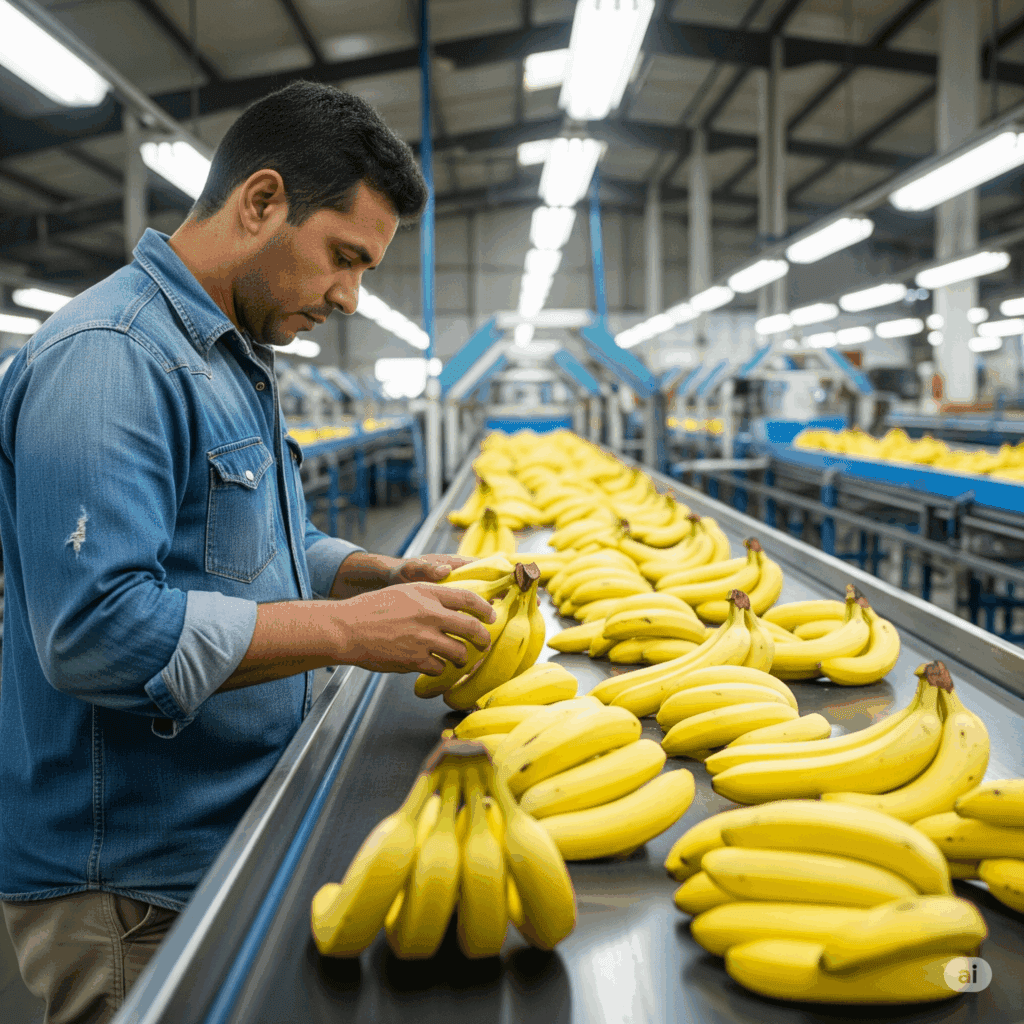
Symptoms on Banana Fruits
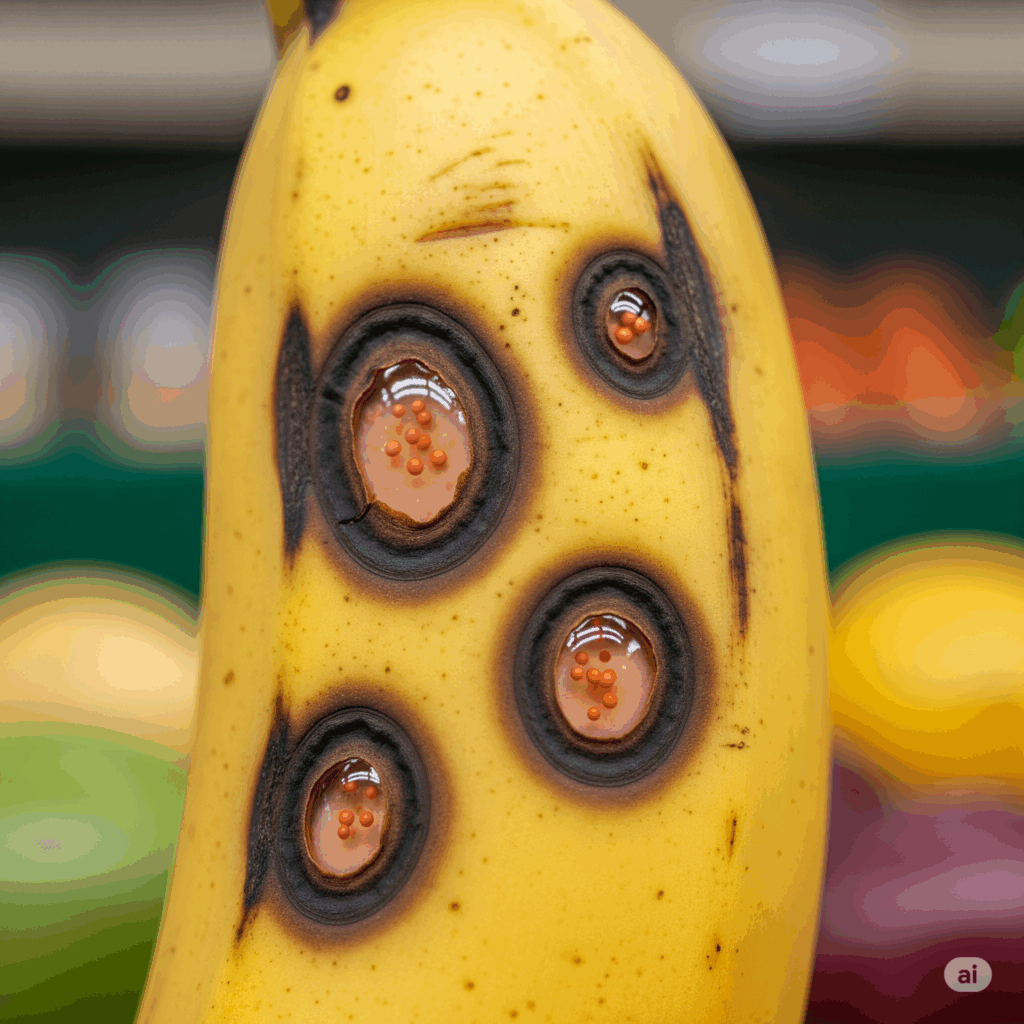
- Small, Sunken Spots: On green fruits, the first lesions can be small, lenticular spots of a dark brown to black color, slightly sunken, with pale margins. These can be difficult to detect with the naked eye.
- Expansion and Coalescence: As the fruit ripens and turns yellow, these lesions enlarge, become darker, and sink visibly. Several spots can merge to form irregular patches of considerable size.
- Pink-Orange Fungal Growth: A distinctive feature is the appearance of small masses of spores (acervuli) of an orange to salmon-pink color in the center of the sunken lesions, especially in high humidity conditions. These masses are mucilaginous and are easily released.
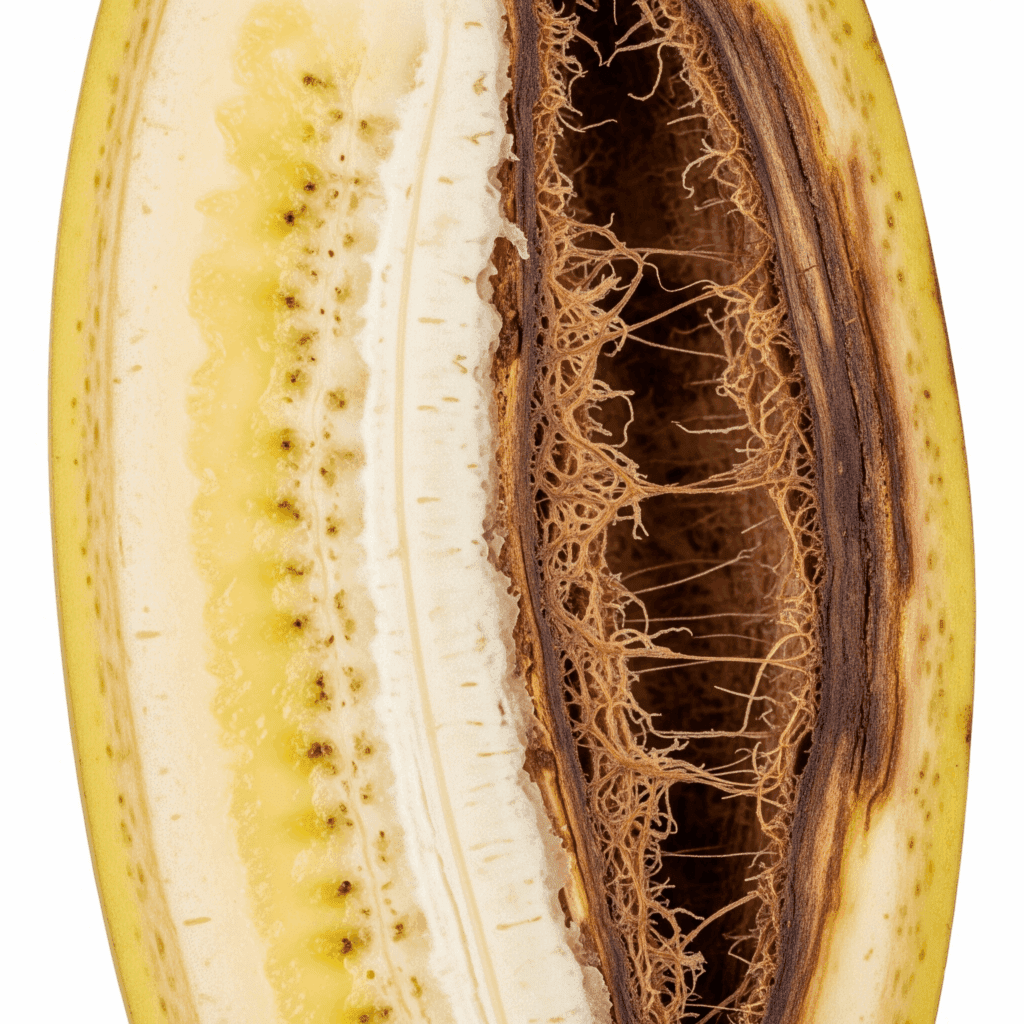
- Premature Ripening and Internal Rot: Severely affected fruits may ripen irregularly or prematurely. Deep infection can lead to an internal rot of the pulp, which becomes soft and watery, seriously affecting edible quality and shelf life.
- Fruit Tip: Symptoms can also start at the fruit tip, a result of a previous floral infection, leading to an apical rot.
Symptoms on Other Parts of the Plant (Less Common or Severe)
Although Anthracnose is primarily known for its impact on fruit, the fungus Colletotrichum musae can also infect other parts of the plant, especially senescent or damaged tissues:
- Leaves: Rarely, necrotic spots may be observed on old or stressed leaves, although these are less significant than the damage caused by Black Sigatoka.
- Inflorescences: The bracts or the male flower can be infected, acting as inoculum for fruit infection.
- Crowns of Bunches: Lesions on the crown of the bunch, where the banana fingers join, are common and can spread to the fruits, causing what is known as “crown rot,” often in association with other fungi.
Economic Impact: Losses in Quality and Commercialization
Banana Anthracnose is one of the main causes of fruit rejection in export and local markets. Its impact translates to:
- Reduced Commercial Quality: The appearance of anthracnose lesions makes the fruits unacceptable to consumers, even if the pulp is not yet completely affected. This drastically reduces their commercial value.
- Shortened Shelf Life: Infected fruits deteriorate more quickly during storage and transport, arriving at their destination in suboptimal conditions or rotting completely.
- Post-harvest Losses: As a disease that primarily develops during ripening, many of the losses occur after harvest, adding management, transport, and distribution costs to the product’s value losses.
- Phytosanitary Barriers: The presence of the disease can lead to restrictions on international trade, affecting the competitiveness of exporting countries.
Integrated Management Strategies to Combat Anthracnose
Effective control of Banana Anthracnose requires an integrated approach that combines cultural practices in the field with post-harvest measures.
Field Management: Reducing Inoculum
- Plantation Sanitation:
- Debris Removal: Remove and destroy old, dry, or diseased leaves, senescent bracts, wilted flowers, and any fallen or damaged fruits from the plantation. This significantly reduces the sources of fungal inoculum.
- Weed Control: Keep the plantation free of weeds, as they can create high humidity conditions that favor the dispersal and survival of the fungus.
- Canopy Management:
- Proper Pruning and Desuckering: Maintain a planting density and a desuckering program that allows for good air circulation and sunlight penetration into the plant canopy. This helps reduce relative humidity around the developing fruits.
- Balanced Nutrition: A well-nourished plant is more resistant to diseases. An adequate fertilization program, based on soil analysis, contributes to the overall health of the plantation.
- Harvest at the Optimal Time: Harvest bunches at the proper stage of physiological maturity, avoiding over-ripening on the plant, which increases susceptibility.

Post-harvest Management: Protecting the Ripening Fruit
- Minimizing Physical Damage: It is essential to handle fruits with extreme care during harvest, transport, and packing to avoid wounds or bruises on the peel. Any physical damage is a gateway for the fungus.
- Post-harvest Treatments:
- Washing and Brushing: Washing bunches or banana fingers with clean water (sometimes with allowed disinfectants) helps to remove superficial spores.
- Fungicide Immersion: The immersion of bunches or fingers in approved fungicide solutions (such as thiabendazole or imazalil) is a common practice in the export industry to control fungal development during storage and transport. However, fungicide rotation is crucial to prevent resistance.
- Hot Water Treatments: Brief immersion of fruits in hot water at controlled temperatures (around 50-55°C for a few minutes) can reduce the fungal load and the incidence of the disease, especially in organic production systems.
- Temperature and Humidity Control: Maintaining fruits in optimal temperature and humidity conditions during transport and storage is vital. Cool storage temperatures (but not too low to avoid chilling injury) and controlled relative humidity slow down the fungus’s development.
- Good Hygiene in Packing Houses: Regularly clean and disinfect packing facilities and equipment to prevent the accumulation of inoculum and cross-contamination.
Research and Development: A More Resilient Future
Research focuses on developing banana varieties with greater resistance or natural tolerance to Anthracnose. Likewise, biological alternatives are being explored, such as the use of antagonistic microorganisms (for example, certain strains of Bacillus subtilis or Trichoderma spp.) or botanical extracts that can sustainably inhibit the growth of Colletotrichum musae.
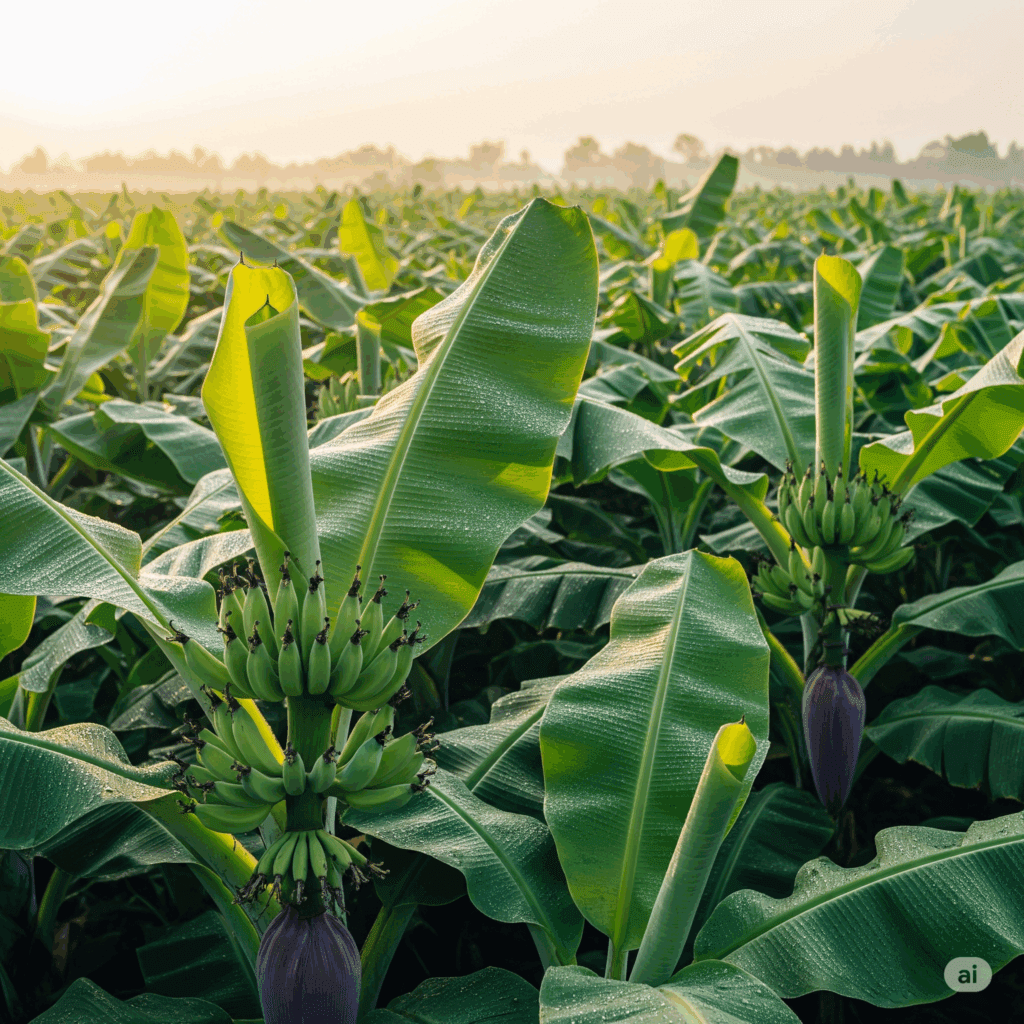
Banana Anthracnose is a continuous battle between a fruit’s shelf life and an opportunistic fungus. A proactive approach, combining the best agronomic practices in the field with rigorous post-harvest management, is the key to ensuring that bananas and plantains reach consumers with the quality they deserve.
References
- CABI. (n.d.). Colletotrichum musae (anthracnose of banana). Retrieved from https://www.cabi.org/isc/datasheet/14959
- FAO. (2018). Handling of post-harvest diseases in fruits and vegetables. Retrieved from https://www.fao.org/3/I8641ES/i8641es.pdf
- Government of Mexico – SENASICA. (n.d.). Management measures for Banana Anthracnose (Colletotrichum gloeosporioides). Retrieved from https://www.gob.mx/cms/uploads/attachment/file/979052/32._Medidas_de_manejo_contra_Colletotrichum_gloesporioides_en_banano.pdf
- Plantix. (n.d.). Banana anthracnose. Retrieved from https://plantix.net/es/library/plant-diseases/100078/anthracnose-of-banana/
- Redalyc. (2012). Aspects of the biology of Colletotrichum musae (Berk. & Curt.) V. Arx and Fusarium pallidoroseum (Cooke) Saccardo. Retrieved from https://www.redalyc.org/pdf/2091/209118145001.pdf
- ResearchGate. (2021). Isolation and identification of the mold causing anthracnose in musa paradisiaca l. (plantain) in cooperativa san carlos, el salvador and isolation of molds and yeasts with antagonistic capacity. Retrieved from https://www.researchgate.net/publication/352906881_Aislamiento_e_identificacion_del_moho_causante_de_antracnosis_en_musa_paradisiaca_l_platano_en_cooperativa_san_carlos_el_salvador_y_aislamiento_de_mohos_y_levaduras_con_capacidad_antagonista