 AgronoBlog – Agriculture Blog
 Proper **potato storage** is a critical phase in the production chain, just as important as cultivation. Good post-harvest management prevents significant losses from sprouting, rot, and quality deterioration, ensuring that the tubers reach the market or the table in optimal condition. This article details the best practices and techniques for potato storage.

Importance of Proper Potato Storage
The potato is a perishable product that requires specific conditions to maintain its quality and prolong its shelf life.
Impact on Quality and Shelf Life
Correct storage **preserves the organoleptic characteristics** of the potato (flavor, texture, appearance), **minimizes weight loss** from dehydration, and **extends its commercial and consumption life**. This is fundamental for both the producer, who can sell their product throughout the year, and the consumer, who receives a fresh, quality product.
Consequences of Improper Storage
Poor storage can lead to serious consequences, such as: **premature sprouting**, **rot from diseases** (bacterial or fungal), **greening** due to light exposure, **weight loss** and loss of firmness, and the development of **undesirable flavors**. All of this translates into significant **economic losses** and a product of lower value.
Optimal Conditions for Potato Storage
Establishing and maintaining the right environmental conditions is the key to successful storage.
Ideal Temperature
Temperature is the most critical factor in potato storage.
Temperature Maintenance
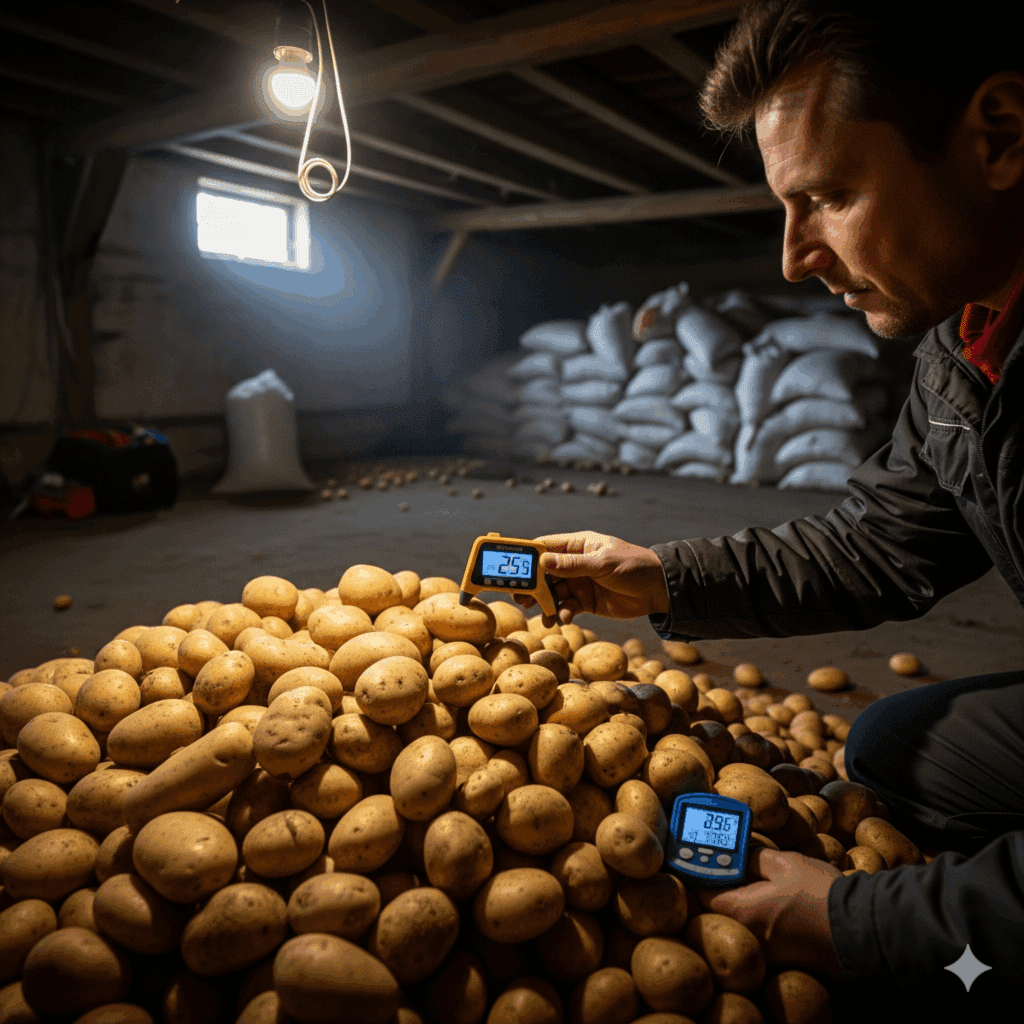
The **ideal temperature** for long-term storage of consumer or processing potatoes is between **7°C and 10°C** (45-50°F). For seed potatoes, it can be slightly lower, between 3°C and 4°C (37-39°F), to inhibit sprouting. Maintaining a constant temperature is essential, avoiding sudden fluctuations.
Impact of Extreme Temperatures
Temperatures that are **too high** (above 10°C) accelerate the tuber’s respiration, leading to sprouting, dehydration, and susceptibility to diseases. Temperatures that are **too low** (near 0°C) can cause cold damage, making the potato develop an undesirable sweet flavor due to the accumulation of sugars, and making it more susceptible to rot.
Proper Relative Humidity
Air humidity directly influences weight loss and tuber health.
Humidity Control
The **ideal relative humidity** for potato storage is between **90% and 95%**. Maintaining this range helps to **minimize water loss** from transpiration and dehydration of the tubers. This can be achieved through humidification systems or ventilation control.
Problems Associated with High or Low Humidity
Humidity that is **too low** causes dehydration and wilting of the potato. On the other hand, **excessively high humidity** or condensation on the surface of the tubers creates an environment conducive to the development of fungi and bacteria that cause rot.
Sprout Prevention
Sprouting is a natural process that can reduce the value of the potato for consumption.
Use of Sprout Inhibitors
For long-term storage, especially in the industrial or commercial sector, **sprout inhibitors** can be used.
Common Chemical Products
Among the most common chemical inhibitors are **CIPC (chlorpropham)** and **1,4-DMN**. These products are applied as a mist or gas in the storage facility and work by suppressing sprout growth. Their use must follow strict regulations and recommendations.
Natural Methods
For small-scale or organic farming storage, natural methods can be used such as controlled low-temperature storage (without freezing) and **proper ventilation**. The presence of apples in the storage area can also release ethylene, which helps inhibit sprouting, although its effectiveness is limited.
Light Management
Exposure to light is harmful to stored potatoes.
Storage in Darkness
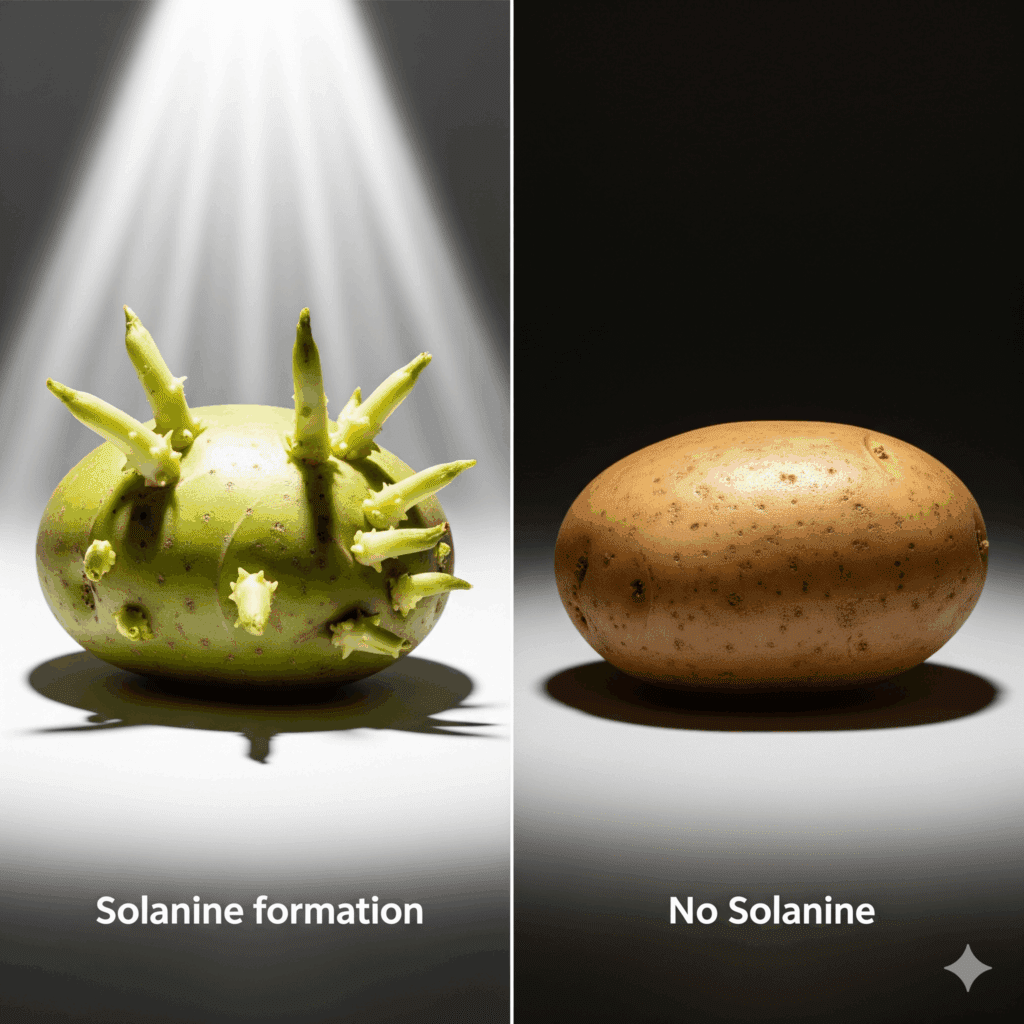
Potatoes must be stored in **total darkness**. Light, even at low levels, induces the greening of the skin and the accumulation of **solanine**, a toxic glycoalkaloid that imparts a bitter taste and is harmful to health.
Effects of Light on Sprouting
Although light is not the main factor, prolonged exposure can stimulate sprouting, especially in combination with high temperatures.
Rot Prevention
Rots are one of the main causes of loss during storage.
Tuber Selection and Preparation
The process begins before entering the storage facility.
Inspection and Classification
Before storing, it is crucial to **inspect and classify** the tubers. **Damaged, cut, bruised, diseased, or rotting potatoes must be removed**, as a single infected potato can quickly contaminate an entire batch.
Pre-Storage Treatments
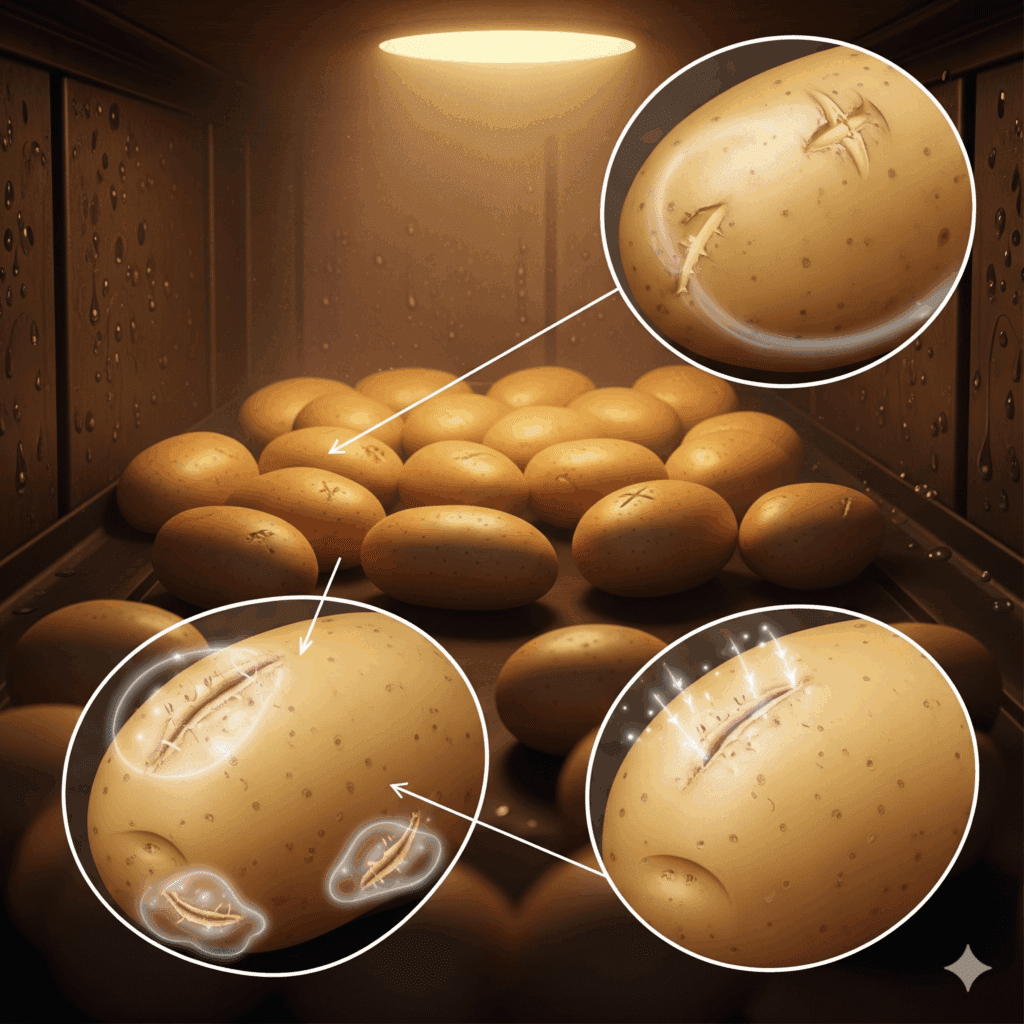
A **curing** period for freshly harvested tubers is recommended. This involves keeping the potatoes at a temperature of 10°C to 15°C (50-59°F) with high humidity (90-95%) for 10 to 14 days. This process helps heal superficial wounds and thicken the skin, reducing the entry of pathogens and water loss. After curing, the temperature is gradually lowered to the storage temperature.
Sanitary Conditions of the Storage Facility
A clean and controlled environment is fundamental.
Cleaning and Disinfection
The storage facility must be **thoroughly cleaned and disinfected** before each new storage season. This includes removing remnants from previous harvests and applying approved surface disinfectants.
Pest and Disease Control
An **integrated pest management (IPM)** program must be implemented to control rodents, insects, and other pests that can damage potatoes or spread diseases. Constant monitoring and a quick response are essential.
Storage Techniques
The way potatoes are stacked and organized influences ventilation and damage prevention.
Bulk Storage
Common for large production volumes, where potatoes are piled directly on the floor or in structures.
Advantages and Disadvantages
The main **advantage** is space efficiency and the automation of filling and emptying. The **disadvantage** lies in the difficulty of inspecting potatoes inside the pile and the risk of heat and moisture accumulation if ventilation is inadequate.
Recommendations for Bulk Storage
It is vital to ensure adequate **forced ventilation** to maintain uniform temperatures and humidity throughout the pile. The height of the pile must be limited to prevent crushing of the lower tubers.
Container Storage
This method offers greater flexibility and control.
Types of Containers
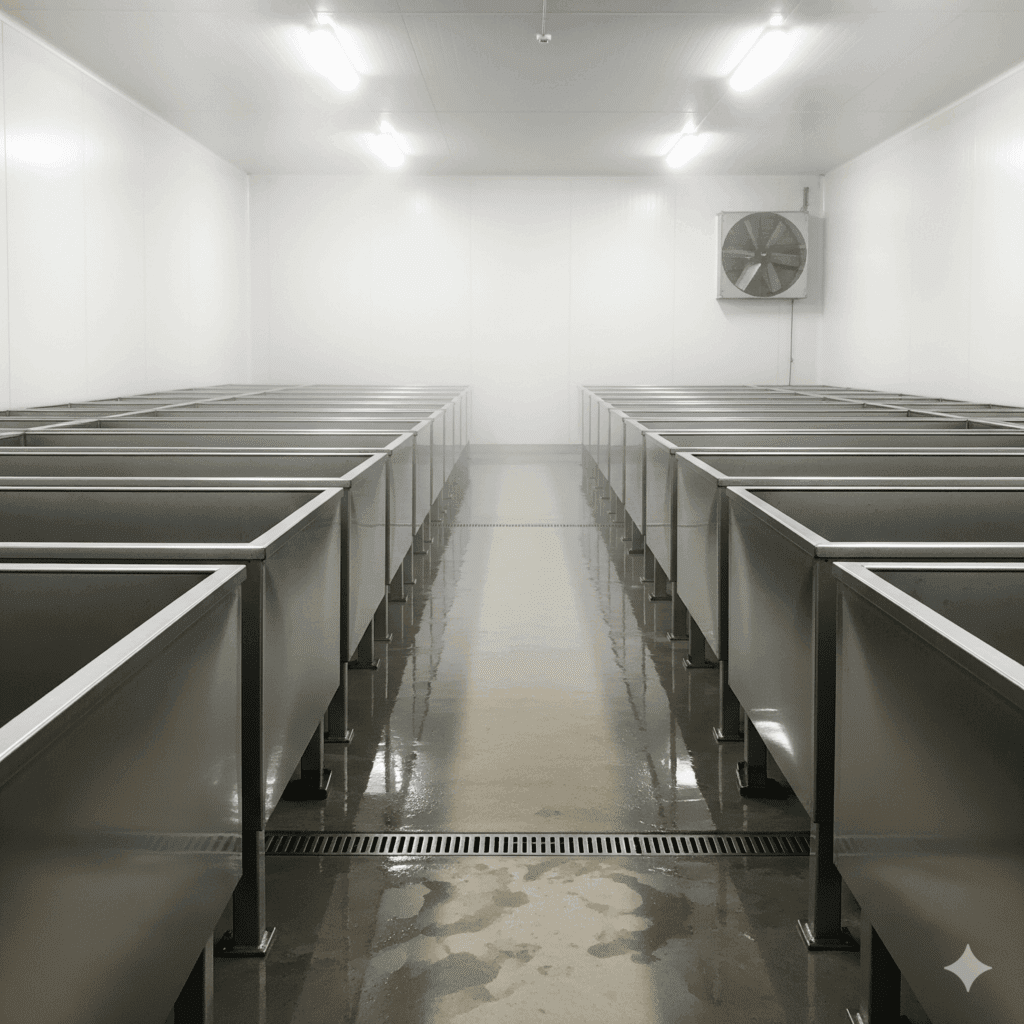
**Boxes, sacks, or container pallets (bins)** are commonly used. Containers must be sturdy, have good ventilation, and be easy to handle.
Handling and Container Rotation
Container storage facilitates the **individual inspection of batches** and allows for better air circulation. Container rotation can be useful to ensure equitable access to storage conditions.
Monitoring and Control During Storage
The work doesn’t end once the potatoes are in storage; continuous monitoring is crucial.
Regular Tuber Inspection
Perform **periodic inspections** of stored potatoes to detect early signs of sprouting, rot, or pest damage. Promptly remove any affected tubers to prevent spread.
Environmental Conditions Control
Use **thermometers and psychrometers (or digital sensors)** to constantly monitor the temperature and relative humidity inside the storage facility. Adjust ventilation, heating, or humidification systems as needed to maintain optimal conditions, thus ensuring the maximum quality and shelf life of the potato.