 AgronoBlog – Agriculture Blog
 Imagine a plantation where the leaves, instead of spreading majestically, cluster at the top, short and stiff, as if something were holding them back. The fruits, if they appear at all, are small, deformed, and have no commercial value. This is the bleak scenario left by the Banana Bunchy Top Virus (BBTV), one of the most destructive viral diseases for banana and plantain cultivation worldwide. Its name perfectly describes the most characteristic symptom: a “bunchy” or “crowded” top of leaves. The absence of a cure for infected plants makes this virus an eradication threat, leaving prevention and vigilance as the only weapons to protect your production.
The Viral Agent and Its Cunning Vector: BBTV and the Banana Aphid
The Banana Bunchy Top Virus (BBTV) is a Babuvirus from the Nanoviridae family. It is a persistent and non-propagative virus, meaning that once the vector acquires it, it carries it for life, but the virus does not replicate within the insect. However, it replicates at high concentrations in the infected banana plant.
The Black Banana Aphid: The Virus’s Ally
The main method of transmission and spread of BBTV in the field is through a small but efficient insect: the black banana aphid (Pentalonia nigronervosa). These aphids are small, dark-colored, and feed preferably on the tender tissues of banana plants, such as young shoots, newly emerged leaves, and pseudostems.

When an aphid feeds on a BBTV-infected plant, the virus is ingested and stored in the insect’s body. Then, when this aphid moves to and feeds on a healthy plant, it inoculates the virus, initiating a new infection. Aphid mobility, along with their ability to fly or be carried by the wind, contributes to the rapid local spread of the virus.
Long-Distance Spread: Infected Planting Material
The long-distance spread of BBTV, even between countries or regions, occurs mainly through the movement of infected planting material. This includes suckers, corms, or even tissue-cultured plantlets that have not been properly certified as virus-free. Once infected material is introduced into a new area, the local aphid vector can quickly acquire the virus and begin spreading it.
Recognizing the Symptoms: The “Bunchy Top” and Other Key Signs of BBTV
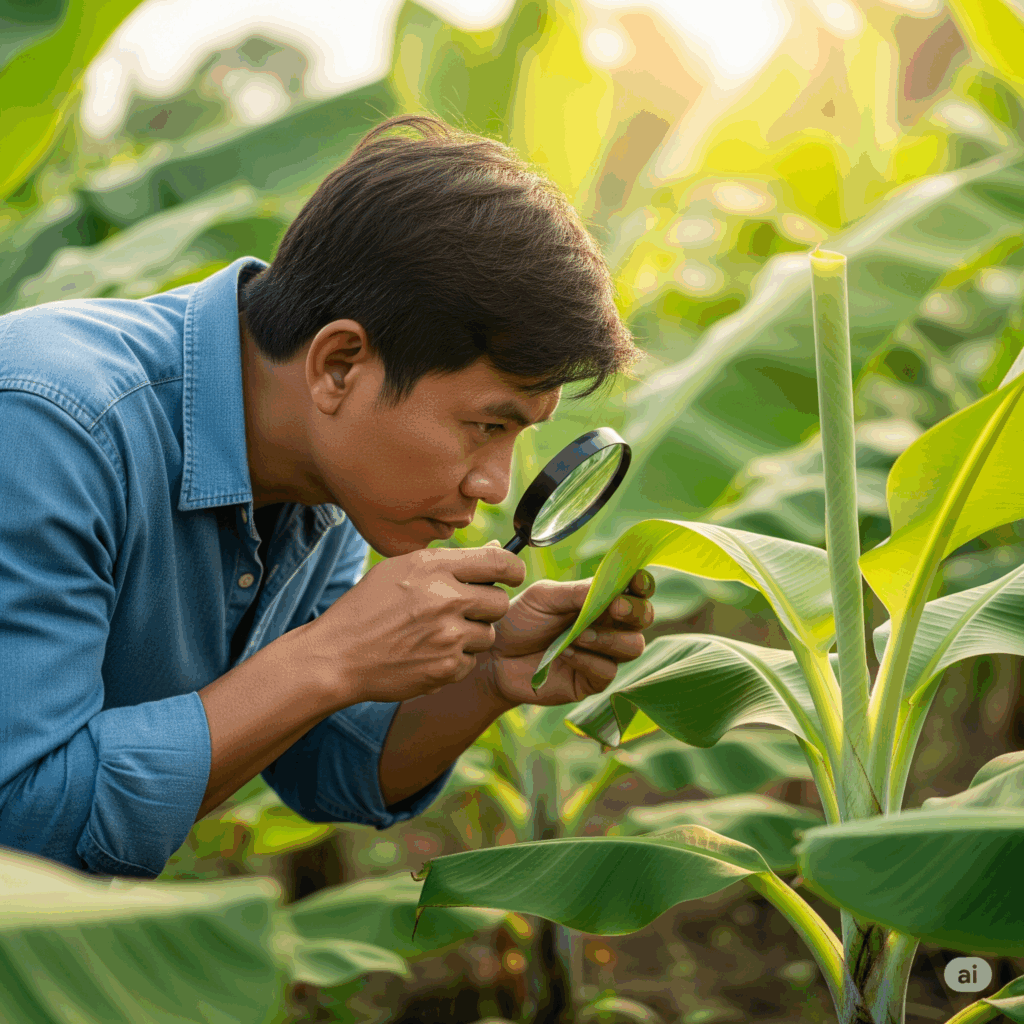
Identifying the symptoms of BBTV is crucial for early management, as once a plant is infected, there is no cure. Symptoms may take between 20 and 85 days to appear after infection, and their severity depends on the plant’s age and the variety’s susceptibility.
Distinctive Symptoms in Leaves and Overall Growth
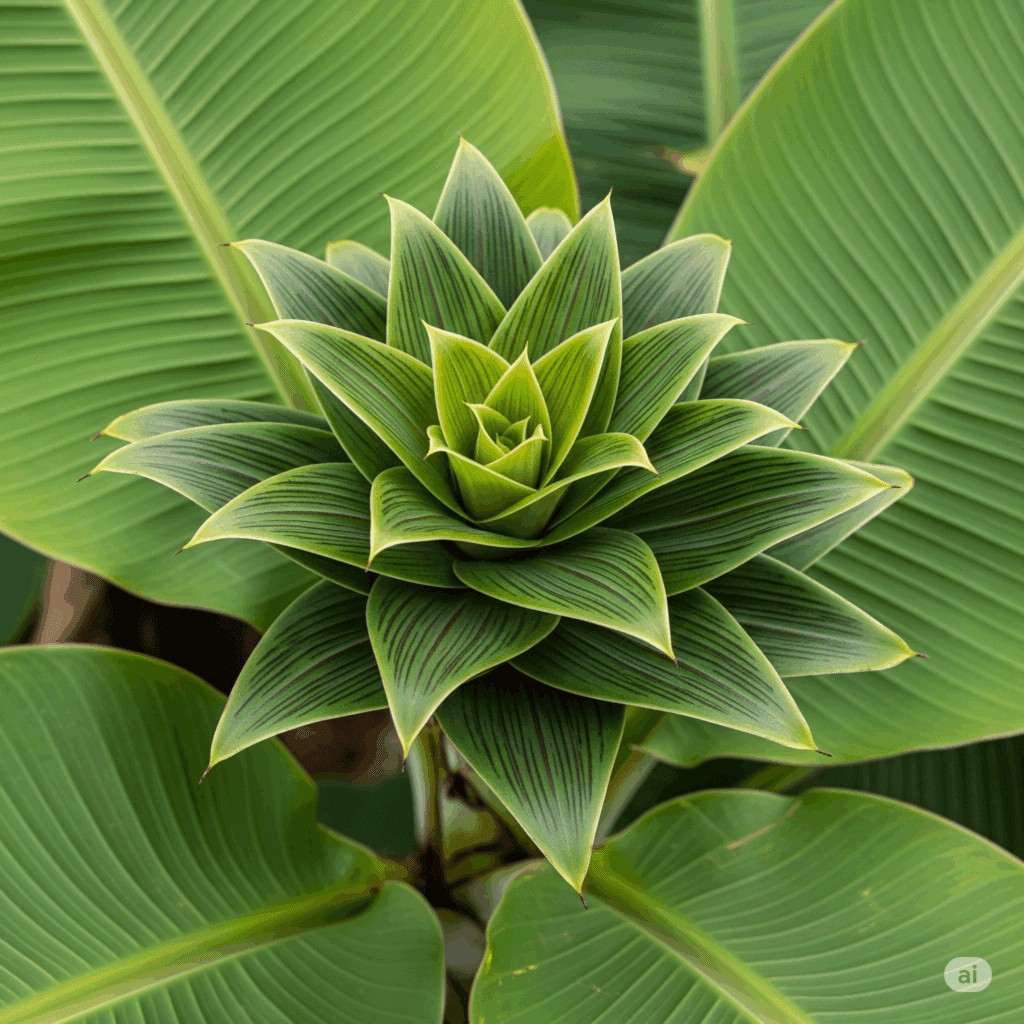
- Clustered or “Bunched” Leaves (Bunchy Top): This is the most characteristic symptom and the one that gives the disease its name. Newly emerged leaves are shorter, narrower, and stiffer than normal. Instead of unfolding horizontally, they tend to grow more vertically and cluster at the top of the pseudostem, giving a “rosette” or “bunch” appearance.
- Yellow or Chlorotic Leaf Margins: The edges of affected leaves often show noticeable yellowing (marginal chlorosis).
- Dark Green Streaks (“Morse Code”): When looking at the leaves, especially from the underside and against the light, small, discontinuous dark green streaks can be seen along the veins, secondary veins, and petioles. These streaks are sometimes described as a “Morse code” pattern or “J-hooks” near the midrib.
- Rigid and Brittle Leaves: Infected leaves are thicker, stiffer, and brittle to the touch. They may have wavy or irregular edges.
- Stunting and Dwarfing: Plants infected from an early stage experience a severe reduction in growth (dwarfism). The pseudostem shortens and the plant becomes squat in appearance.
- Reduced or Absent Fruit Production: If the plant manages to produce bunches, these are significantly smaller, deformed, and the bananas are underdeveloped and non-commercial. In many cases, infected plants produce no fruit at all.
- Symptoms in Suckers: Suckers emerging from a BBTV-infected mother plant will also show severe stunting and leaf clustering, and will serve as sources of inoculum for further spread.

It is important to distinguish BBTV from nutrient deficiencies or water stress damage, which can cause stunting or yellowing symptoms but do not show the characteristic dark green streaks or specific leaf deformation caused by the virus.
Economic and Ecological Impact: A Global Threat to Bananas
The Banana Bunchy Top Virus is considered the most serious viral disease of bananas worldwide due to its ability to cause yield losses of up to 100% in infected plants.
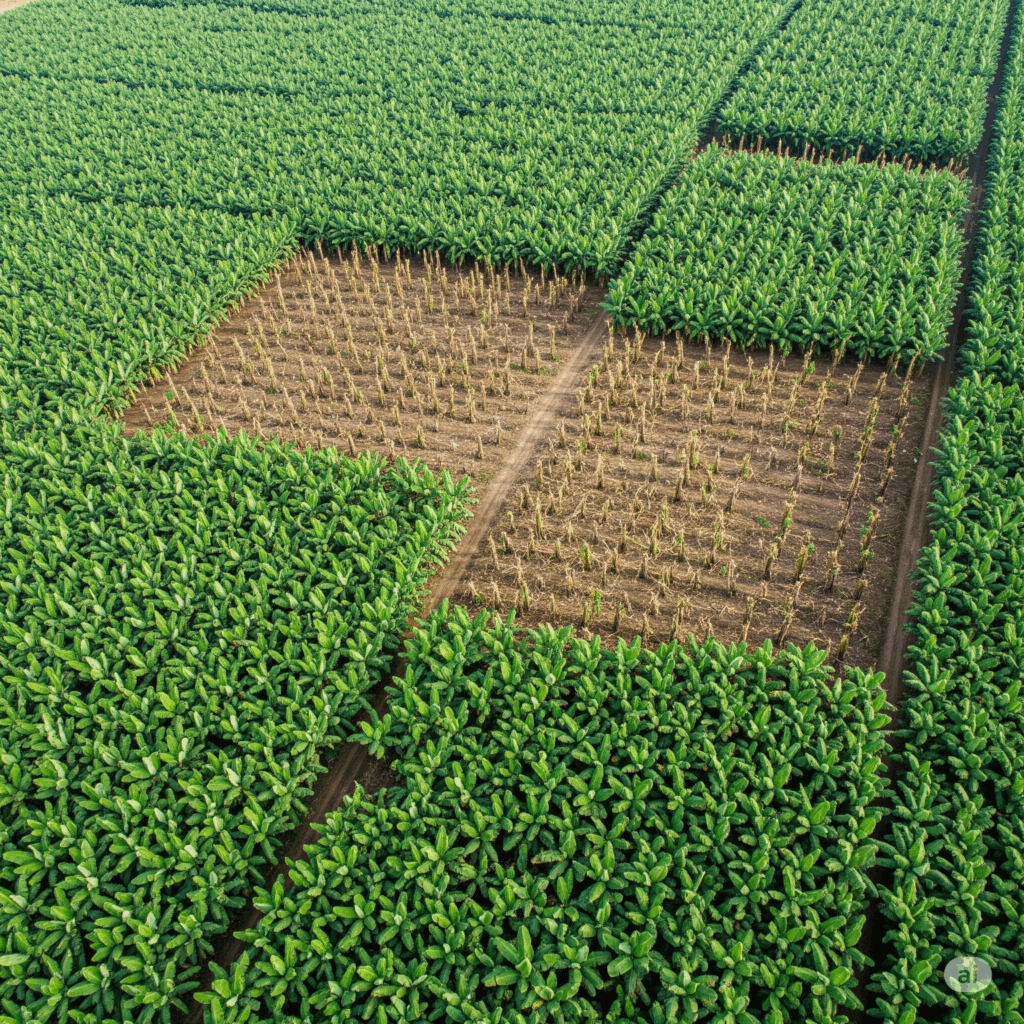
- Total Crop Loss: Plants infected at early stages do not produce commercial fruit, completely destroying the productivity of a section or the entire plantation.
- Eradication Costs: BBTV control involves eradicating infected plants, which represents a direct loss of investment and labor.
- Impact on Smallholders: For small farmers who rely on bananas as a main source of income and food, BBTV can mean the total loss of their livelihood and food security.
- Threat to Biodiversity: The virus can also affect wild species of Musa (the genus to which bananas and plantains belong), threatening the genetic diversity of musaceae.
- Trade Barriers: The presence of BBTV can impose restrictions and quarantines on the movement of banana planting material and products between regions and countries, affecting international trade.

Integrated Management Strategies for BBTV: An Eradication-Based Approach
There is no chemical cure for plants infected with the Banana Bunchy Top Virus. Once a plant is infected, the virus is systemically distributed throughout the plant, including its rhizomes and suckers. Therefore, management is based on a rigorous approach of early detection, eradication, and prevention of spread.
Pillars of Integrated BBTV Management (IPM-BBTV)
- Use of Healthy and Certified Planting Material: This is the most critical measure to prevent the introduction of the virus.
- Use only banana seedlings from tissue culture (in vitro) that have been certified virus-free through laboratory testing.
- Avoid using suckers or corms from plantations where BBTV has been reported or where the phytosanitary status is unknown.
- Monitoring and Early Detection: Regular and systematic plantation inspection is essential.
- Train personnel to recognize BBTV symptoms, especially the subtle “Morse code” streaks on young leaves.
- Conduct frequent inspection rounds, at least twice a month, paying special attention to new shoots and areas where the virus has previously been reported.
- Eradication of Infected Plants (Rogueing): Once a plant with symptoms is detected, it must be immediately removed to prevent it from serving as a source of inoculum for new infections.
- Aphid Control Before Eradication: Before cutting or destroying the plant, it is recommended to apply a systemic insecticide to kill any aphids present. This prevents aphids from moving to healthy plants and spreading the virus when disturbed.
- Eradication Method: The infected plant and its suckers must be destroyed. One effective method is injecting a systemic herbicide (such as glyphosate) directly into the pseudostem. This kills the plant and prevents new infected regrowth. Plant residues should be buried or left to dry in situ if herbicide has been used.
- Containment Area: Consider eradicating asymptomatic plants within a close radius of the infection focus, as they may be latently infected.
- Vector Control (Banana Aphid): Reduce populations of the aphid Pentalonia nigronervosa in the plantation.
- Insecticides: Apply systemic or contact insecticides to control aphid populations, especially on tender shoots.
- Cultural Control: Remove weeds and “wild bananas” or abandoned plants around the plantation, as they may serve as alternate hosts for aphids and the virus.
- Biological Control: Encourage the presence of natural enemies of aphids (such as lady beetles, lacewings, or parasitic wasps).
- Strict Biosecurity: Implement measures to prevent the entry and spread of the virus and aphid.
- Quarantine: Avoid moving planting material (suckers, corms) from BBTV-endemic regions to virus-free areas.
- Disinfection: Clean and disinfect tools, equipment, and footwear when moving between plots or plantations.
Research and Future Perspectives
Active research is focused on developing banana varieties resistant to BBTV, often through biotechnological approaches such as genetic engineering (using techniques like RNA interference, RNAi) to develop resistance to the virus or the vector. Efforts are also being made to find faster and more cost-effective detection methods and to develop epidemiological models to predict virus spread and optimize control strategies.
The Banana Bunchy Top Virus is a persistent threat that demands continuous vigilance and a rapid, coordinated response. The adoption of an Integrated Management program, with a strong emphasis on biosecurity and eradication, is essential to protect the sustainability of banana cultivation worldwide.
References
- CABI. (n.d.). Banana bunchy top virus (banana bunchy top). Retrieved from https://www.cabi.org/isc/datasheet/7740
- CTAHR – University of Hawai’i. (n.d.). Banana Bunchy Top Disease in Hawaii: Symptoms, Diagnosis and Management. Retrieved from https://www.ctahr.hawaii.edu/bbtd/index.html
- FAO. (n.d.). Banana Bunchy Top Disease. Retrieved from https://www.fao.org/plant-protection/resources/fao-technical-guidance-resources/banana-bunchy-top-disease/en/
- Frontiers in Plant Science. (2024). Alternative hosts of banana bunchy top virus in the Philippines and the first evidence of seed transmission of BBTV. Retrieved from https://www.frontiersin.org/journals/plant-science/articles/10.3389/fpls.2024.1467331/full
- Plantix. (n.d.). Banana streak virus. Retrieved from https://plantix.net/es/library/plant-diseases/200018/banana-streak-virus/ (Note: Although the URL says “Banana Streak Virus,” the description and symptoms in Plantix for BBTV are correct).
- Promusa. (n.d.). Banana bunchy top virus. Retrieved from https://www.promusa.org/Banana%20bunchy%20top%20virus
- ResearchGate. (2023). Transmission of Banana bunchy top virus (BBTV) by Pentalonia nigronervosa and P. caladii. Retrieved from https://www.researchgate.net/figure/Transmission-of-Banana-bunchy-top-virus-BBTV-by-Pentalonia-nigronervosa-and-P-caladii_fig4_235716674
Related posts:
 Optimizing Banana Cultivation: Strategies for Successful Production
  Optimizing Banana or Plantain Cultivation: Detailed Strategies for Successful and Sustainable Production
  Banana Anthracnose: The Dark Side of Ripening That Affects Your Harvest
  Banana Moko: When a Bacterium Threatens to Destroy Your Harvest (and How to Stop It)