 AgronoBlog – Agriculture Blog
 The banana, or plantain, is much more than a fruit; it’s an economic pillar for thousands of farmers worldwide and a vital food source. However, its cultivation is a constant battle against microscopic enemies: diseases. These can decimate entire plantations, leading to devastating economic losses and impacting food security. But all is not lost. Understanding these silent invaders is the first step to protecting your investment and ensuring the prosperity of your crop. In this article, we’ll unravel the most destructive pathologies that plague bananas, their symptoms, and the most effective strategies to combat them. Are you ready to arm yourself with knowledge and defend your plantation?
The Fungal Scourge: Black Sigatoka, the Global Threat to Bananas
Black Sigatoka, caused by the fungus Mycosphaerella fijensis (also known as Pseudocercospora fijiensis), is undoubtedly the most destructive foliar disease of bananas worldwide. Its impact lies in the drastic reduction of the photosynthetic leaf area, which directly translates into lower fruit production and quality.
How to Recognize Black Sigatoka? Key Symptoms for Early Detection
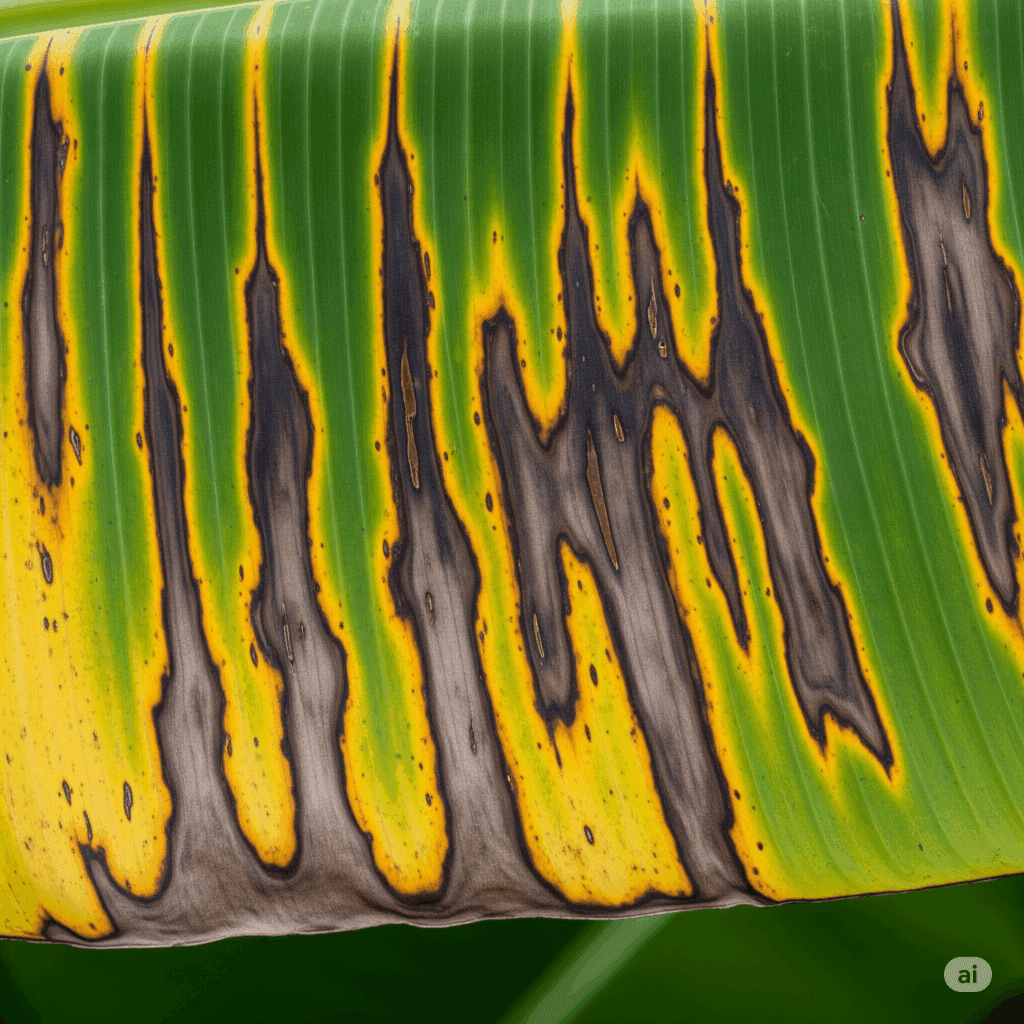
The first signs of Black Sigatoka are usually tiny reddish to brown spots on the underside of younger leaves, especially on the third or fourth unfurled leaf. These “specks” rapidly evolve:
- Reddish-Brown Streaks: Spots lengthen and form streaks that turn dark brown or almost black.
- Necrotic Lesions: Over time, these streaks expand and merge, forming large necrotic areas covering much of the leaf blade.
- Yellowing and Dry Leaves: Severely affected leaves turn yellow, then dry out and die prematurely, remaining attached to the plant with a “scorched” appearance. This reduces the plant’s ability to produce sugars, affecting bunch filling and ripening.
Battling the Fungus: Black Sigatoka Control Strategies
Managing Black Sigatoka is complex and requires an integrated approach.
Cultural Practices to Prevent Sigatoka
- Planting Density Management: Appropriate planting spacing (“Staggered” or “Square”) improves air circulation and reduces humidity, conditions favorable for the fungus.
- Balanced Fertilization: Optimal plant nutrition makes it more resistant. Avoiding excess nitrogen is crucial, as a nutritional imbalance favors the disease.
- Effective Drainage: Avoiding waterlogging is fundamental, as excess water favors pathogen reproduction.
- Constant Desuckering and Weeding: Removing unnecessary suckers and weeds keeps the plantation airy and reduces refuges for the fungus.
- Phytosanitary Defoliation: Regular removal of dry, bent, or diseased leaves reduces the amount of inoculum (spores) in the plantation. It is vital to disinfect tools used between plants to prevent dispersal.
Chemical and Biological Control Against Black Sigatoka
- Strategic Fungicides: Systemic fungicides (like Propiconazole, Benomyl, Carbendazim) are used during the rainy season and contact fungicides (like Mancozeb, Chlorothalonil) during dry seasons. Rotating products with different modes of action is key to preventing resistance.
- Agricultural Oils: Often used alone or in combination with fungicides to improve coverage and efficacy.
- Biological Control: Although still in large-scale development, the search for resistant varieties and the use of biocontrol agents are promising avenues.
Fusarium Wilt: Panama Disease Returns to Attack
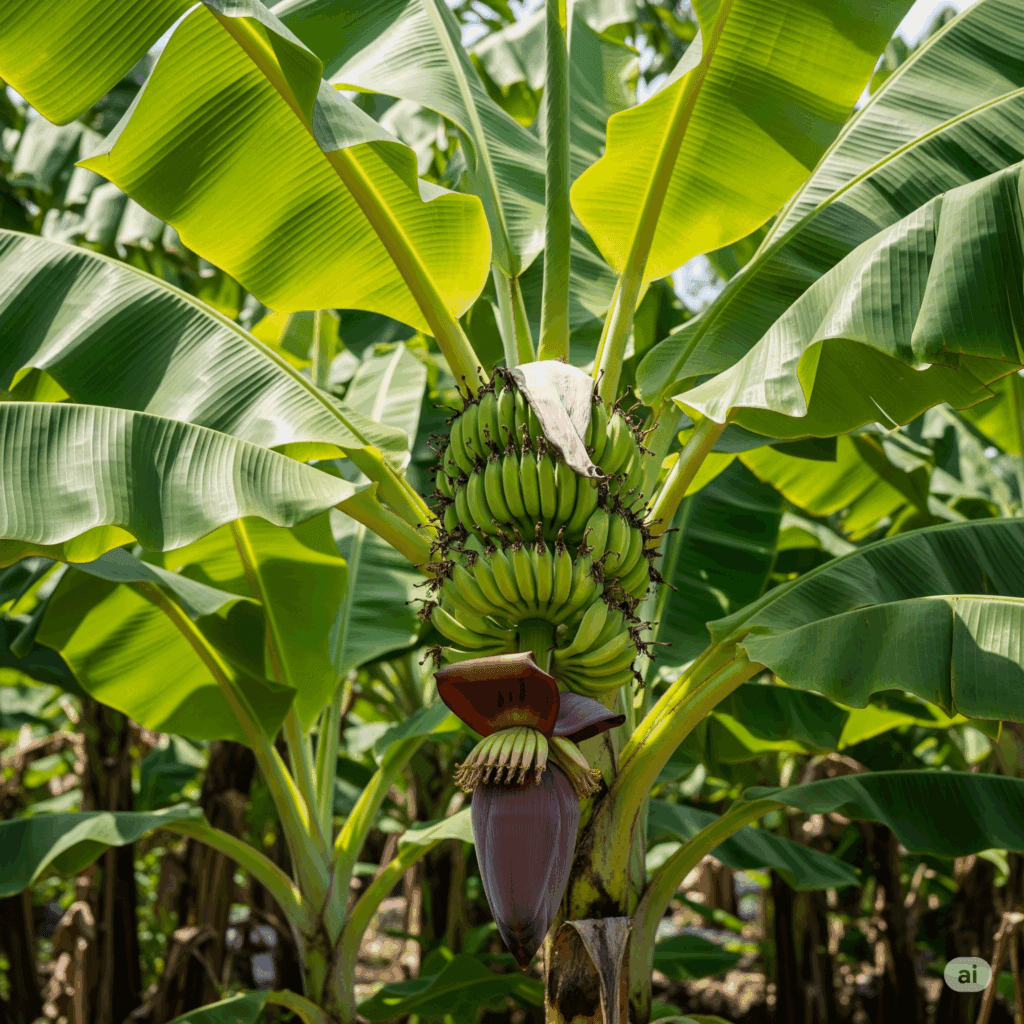
Fusarium Wilt, also known as “Panama Disease,” is one of the most feared diseases in banana cultivation due to its lethality and its ability to persist in the soil for decades. It is caused by the fungus Fusarium oxysporum f. sp. cubense (Foc), a specific strain that attacks musaceae. Historically, it decimated ‘Gros Michel’ plantations in the 20th century. Now, a new race, Tropical Race 4 (TR4), threatens the ‘Cavendish’ variety, the most cultivated and commercialized globally.
Identifying Panama Disease: Symptoms and Disease Progression
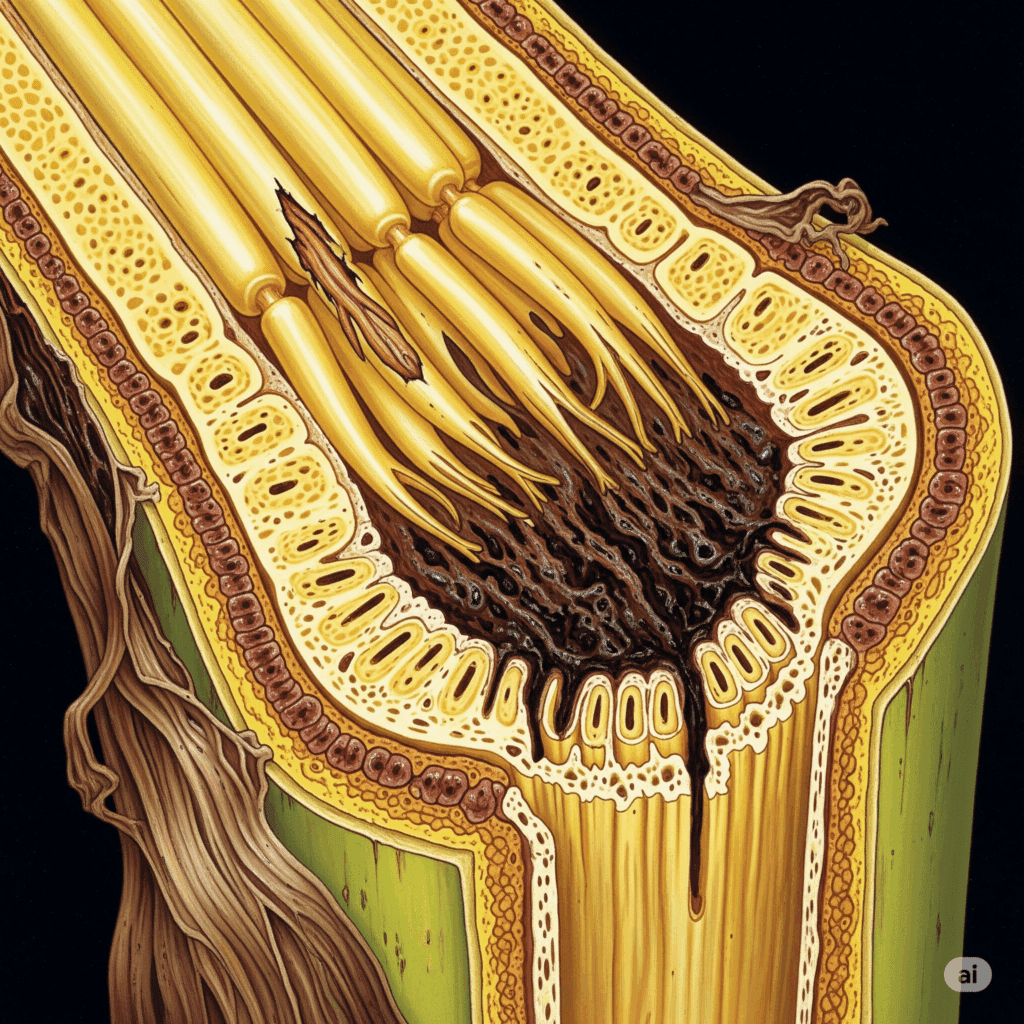
Foc attacks the plant’s vascular system, obstructing the transport of water and nutrients.
- Foliar Yellowing: External symptoms begin with a progressive yellowing of older leaves, starting from the edges and advancing towards the central vein.
- Leaf Collapse: Affected leaves wilt, bend, and hang from the pseudostem, giving a “skirt” or “burned” appearance.
- Pseudostem Cracking: In advanced stages, longitudinal cracks may be observed at the base of the pseudostem.
- Internal Vascular Discoloration: When cutting the pseudostem or rhizome, a characteristic reddish-brown to black discoloration is observed in the vascular bundles, confirming xylem obstruction.
- Plant Death: Finally, the plant completely wilts and dies.
Stopping the Silent Killer: Panama Disease Management
There is no effective chemical cure for Panama Disease once the plant is infected. Strategies focus on prevention and containment.
Prevention and Biosecurity Against Fusarium
- Certified Planting Material: Using tissue-cultured plantlets, guaranteed free of the pathogen, is the most critical measure.
- Quarantine and Movement Restriction: Establish signage barriers to restrict the movement of people, vehicles, and equipment between plantations, and rigorously disinfect tools and footwear.
- Soil Management: Improving soil drainage and aeration reduces conditions favorable for the fungus. Crop rotation with non-host species (like rice) can help reduce the inoculum load in infested soils.
- Elimination of Infected Plants: In case of an outbreak, it is crucial to eradicate and destroy diseased plants and those within a 10-meter radius around them, keeping the area under quarantine for at least 18 months without planting musaceae.
Genetic Resistance: The Long-Term Hope
Research focuses on developing banana varieties resistant to TR4, a long-term solution that could redefine the banana industry.
Banana Moko Disease: A Bacterial Threat to Your Harvest
Banana Moko disease, caused by the bacterium Ralstonia solanacearum race 2, is another devastating disease that can severely affect production. It is characterized by rapid wilting of plants and internal rotting of the fruit. It is highly contagious and spreads easily through contaminated tools, insect vectors, and water.
Warning Signs: How to Identify Banana Moko
Moko symptoms can vary, but they are quite distinctive:
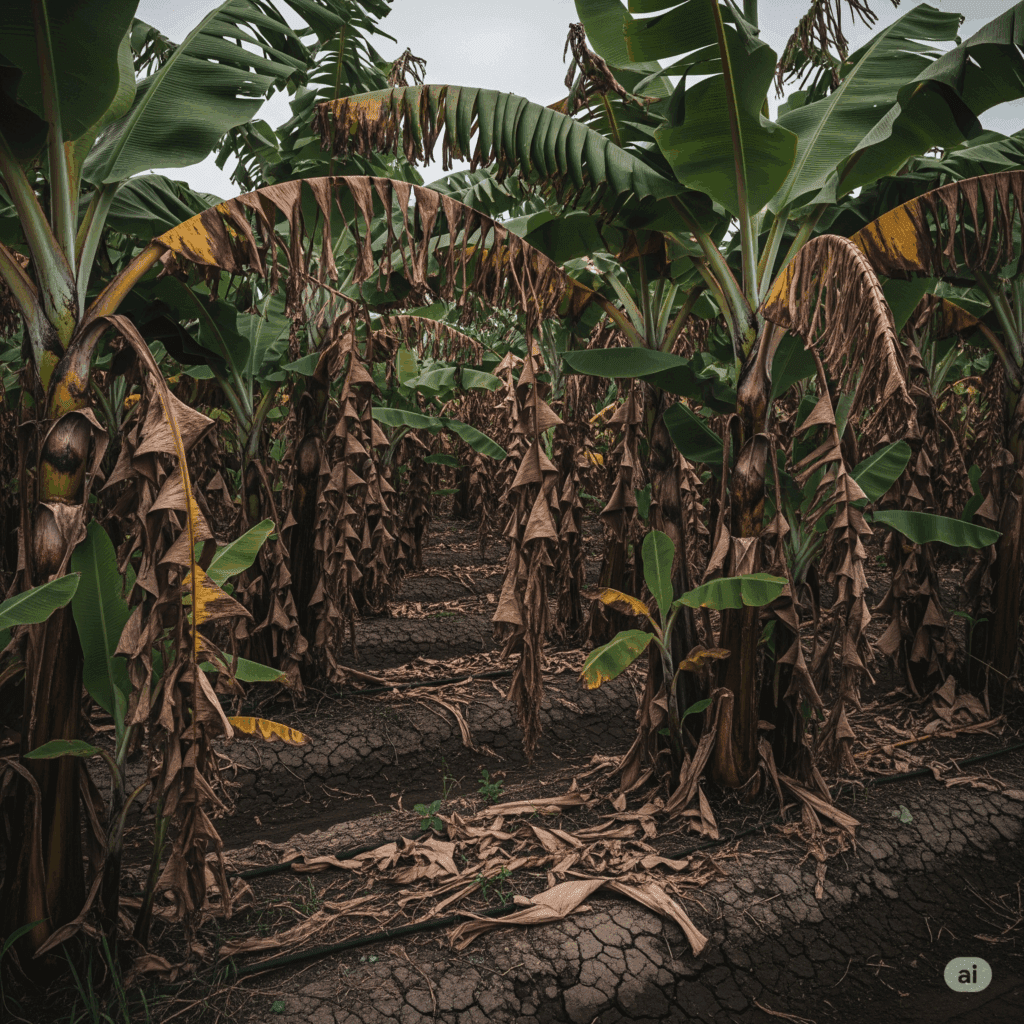
- Progressive Wilting: Leaves wilt and bend along the petiole, often one by one, although they may remain green.
- Vascular Discoloration and Exudate: When cutting the pseudostem, a brown to black discoloration of the vascular bundles is observed, and it is common to see a whitish or yellowish bacterial exudate when pressing the tissues.
- Premature Ripening and Fruit Rot: Fruits in the bunch may ripen prematurely and irregularly. When cut, the pulp shows internal discoloration ranging from yellow to brown or black, and dry rot is observed.
- Male Flower Necrosis: The male flower (“bell”) often blackens and rots.
Defense Strategies: Controlling Banana Moko
Moko control is based on the eradication of infected plants and the implementation of strict biosecurity measures.
Cultural Practices for Moko Control
- Elimination of Diseased Plants: Affected plants must be immediately eradicated, preferably by injecting them with an herbicide (like 20% glyphosate) to ensure their death and prevent the spread of the bacterium.
- Disinfection of Tools: All pruning and desuckering tools must be disinfected with sodium hypochlorite (bleach) solutions between each plant.
- Weed and Insect Control: Eliminate weeds that can serve as hosts for the bacterium and control insects that can act as vectors.
- Use of Healthy Seed Material: Plant only certified seed material free of the disease.
Beyond Fungi and Bacteria: Other Important Diseases
Although Black Sigatoka, Panama Disease, and Moko are the most notorious diseases, other pathologies also pose a significant threat to banana cultivation.

Banana Anthracnose: A Fruit Quality Problem
Anthracnose, caused by the fungus Colletotrichum musae, primarily affects the fruit, especially during ripening, transport, and storage.
- Symptoms: It appears as sunken dark brown to black spots on the fruit peel, which can merge to form extensive patches. In the center of these lesions, an orange to salmon-pink fungal growth often appears. The fruit pulp progressively rots.
- Control: Good post-harvest management, removal of crop residues, and application of protective fungicides in the field are key.
Banana Bunchy Top Virus (BBTV): The Viral Threat
The Banana Bunchy Top Virus (BBTV) is a devastating viral disease primarily transmitted by the black aphid (Pentalonia nigronervosa).
- Symptoms: Infected plants show a rosette-like appearance, with narrow, erect, and progressively shorter leaves, giving it the name “bunchy top.” Dark green streaks are observed along the leaf veins. Growth is inhibited, and the plant does not produce fruits or they are deformed and non-commercial.
- Control: There is no cure for BBTV. Management is based on eradication of diseased plants, control of the aphid vector with insecticides and traps, and the use of virus-free planting material.
Banana Nematodes: Underground Damage
Nematodes, tiny microscopic worms, attack banana roots, compromising water and nutrient absorption and making the plant more susceptible to other diseases.
- Symptoms: Roots show dark lesions, rot, and a reduction in their mass. Externally, plants show yellowing, wilting, reduced vigor, and increased susceptibility to wind toppling.
- Control: The use of nematicides (chemical or biological), crop rotation, soil solarization, and the use of healthy planting material are effective strategies.
An Integrated Approach: The Key to a Healthy Banana Crop
Protecting banana crops from these diseases requires a holistic approach, known as Integrated Pest and Disease Management (IPM). This involves combining various strategies:
- Strict Biosecurity: The most crucial measure to prevent the entry and spread of pathogens, especially those of fungal and bacterial origin transmitted by soil and plant material.
- Constant Monitoring: Regular inspection of plantations allows for early symptom detection and timely action.
- Optimal Cultural Practices: Good agronomic management including balanced fertilization, adequate irrigation, weed control, and appropriate planting density strengthens the plant and makes it more resistant.
- Genetic Control: The use of resistant banana varieties is the most sustainable long-term strategy.
- Responsible Chemical Control: The application of fungicides and bactericides should be selective, rotating products to prevent the appearance of resistance and following expert recommendations.
- Biological Control: Promote the use of beneficial microorganisms and other natural solutions that help suppress pathogens.
Protecting banana cultivation from diseases is an ongoing challenge, but with knowledge, vigilance, and the implementation of integrated management, farmers can safeguard their plantations and ensure the continuity of this valuable production. Investment in research and development of new resistant varieties, along with educating producers on good agricultural practices, are fundamental for the future of the global banana industry.
References
- BASF. (n.d.). Plagas y enfermedades en el cultivo del plátano. Retrieved from https://agriculture.basf.com/co/es/contenidos-de-agricultura/plagas-enfermedades-banano.html
- IDB Invest. (2020). Cuidado con el TR4, la enfermedad del banano que se ha convertido en la pandemia perfecta. Retrieved from https://idbinvest.org/es/blog/agronegocios/cuidado-con-el-tr4-la-enfermedad-que-se-ha-convertido-en-la-pandemia
- Koppert. (n.d.). Fusarium spp – Prevención, control y daños. Retrieved from https://www.koppert.mx/enfermedades-de-las-plantas/fusarium-spp/
- Leroy Merlin. (n.d.). ¿Cómo evitar las plagas y enfermedades del plátano?. Retrieved from https://www.leroymerlin.es/ideas-y-consejos/consejos/como-evitar-las-plagas-y-enfermedades-del-platano.html
- Plantix. (n.d.). Antracnosis del plátano. Retrieved from https://plantix.net/es/library/plant-diseases/100078/anthracnose-of-banana/
- Plantix. (n.d.). Virus del rayado del plátano. Retrieved from https://plantix.net/es/library/plant-diseases/200018/banana-streak-virus/
- SENASICA. (n.d.). Ficha Técnica Fusarium oxysporum f. sp. cubense Raza 4 Tropical. Retrieved from https://dj.senasica.gob.mx/Contenido/docs/vgtl/foc_r4t/5_Ficha%20T%C3%A9cnica%20FOC%20R4T%20Actualizaci%C3%B3n%20Abril%202021.pdf
- SENASICA. (n.d.). Ficha Técnica Marchitez Bacteriana del Plátano. Retrieved from https://www.gob.mx/cms/uploads/attachment/file/466586/13.Ficha_T_cnica_Marchitez_bacteriana_del_pl_tano.pdf
- UPRM. (n.d.). Identificación y Manejo Integrado de la Sigatoka Negra, Mycospharella fijiensis Morelet. Retrieved from https://www.uprm.edu/sea/wp-content/uploads/sites/351/2024/05/Guia-MIP-Sigatoka-Negra-2023.pdf